 Listicle
Who in Ayrshire Does EV Chargers? Installers and Costs
Last Updated: November 18, 2026
Quick Summary
Who in Ayrshire does EV chargers? Home and commercial charging points are fitted by qualified electrical contractors, not the public charging networks you see in car parks. At Test My Electrics, we install EV charging points across Ayrshire for homeowners, landlords and businesses.
- A home charger usually means a single 7kW unit on a dedicated circuit, often with a grant application attached.
- Ask whether an installer is registered with a competent person scheme such as NAPIT or SELECT.
- Installation timeframes run from about a week to a month, and the wiring itself is rarely the slow part.
- The cheapest quote often excludes the earth rod, the fuse board work or the certification.
- Test My Electrics is UKAS accredited, NAPIT and SELECT registered, and fully insured to £10 million.
Table of Contents
- Who in Ayrshire Does EV Chargers? The Short Answer
- Home and Commercial EV Charger Installers in Ayrshire
- Side-by-Side Comparison of Ayrshire Charger Providers
- What EV Charger Installation Costs in Ayrshire Depend On
- Home EV Charging Point Regulations You Need to Meet
- EV Charger Installation Timeframes From Quote to Commissioning
- Home Charging or Public Charging: Which Suits Your Driving
- How to Choose an EV Charger Installer in Ayrshire
- Book Your EV Charger Installation With Test My Electrics
- Frequently Asked Questions
Who in Ayrshire Does EV Chargers? The Short Answer
If you are asking "Who in Ayrshire does EV chargers?", the short answer is that home and commercial charging points are fitted by qualified electrical contractors, not by the public charging networks you see in car parks. At Test My Electrics, we install EV charging points across Ayrshire for homeowners, landlords and businesses.
The distinction matters more than most drivers realise. A public charge point operator runs the machines you plug into at the roadside. An installer wires a dedicated circuit into your property, tests it, and certifies it. Confusing the two is the single most common reason people spend weeks looking in the wrong place.
Below, we break down who actually installs chargers across the three council areas, what the work involves, and what drives the quote. We will also show you how to check an installer's credentials before you let them near your consumer unit.
Home and Commercial EV Charger Installers in Ayrshire
Domestic and commercial installations are two different jobs with two different sets of requirements. A home charger usually means a single 7kW unit on a dedicated circuit, often with a grant application attached. A commercial installation might involve multiple bays, load management, and cabling runs across a car park.
For East Ayrshire readers, our Kilmarnock electrician page confirms local coverage and the EV charger services we run from there. The same team covers Ayr, Prestwick, Troon and the wider South Ayrshire area, so you are not waiting on a contractor travelling from the central belt.
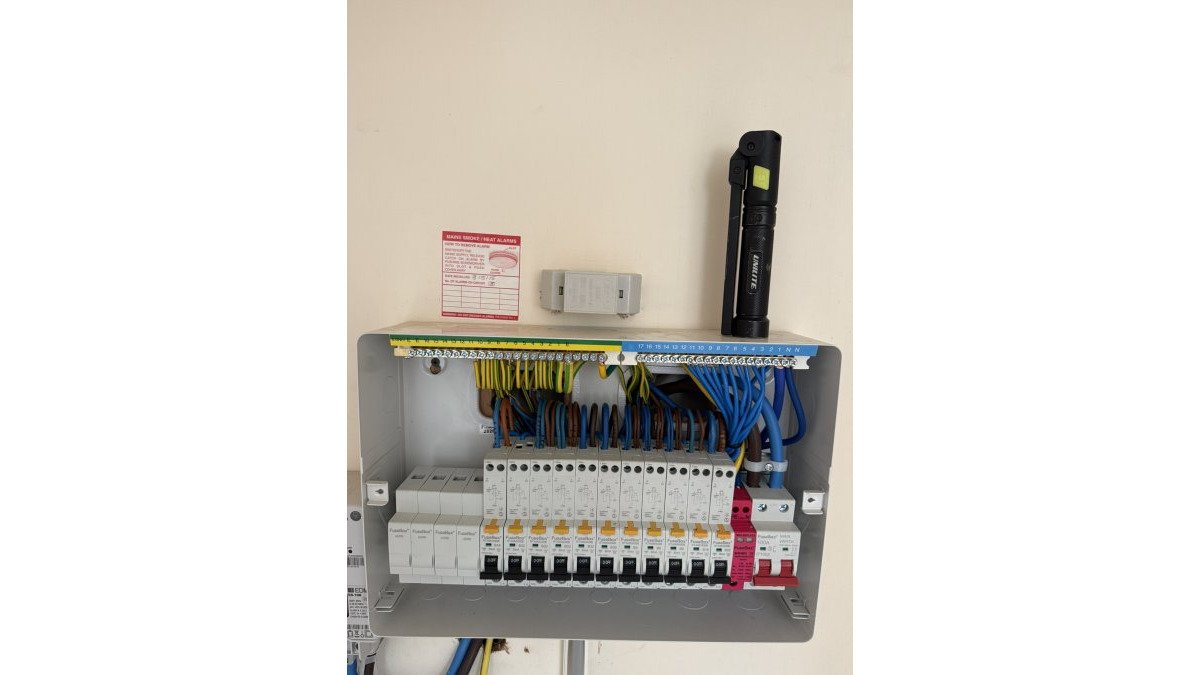
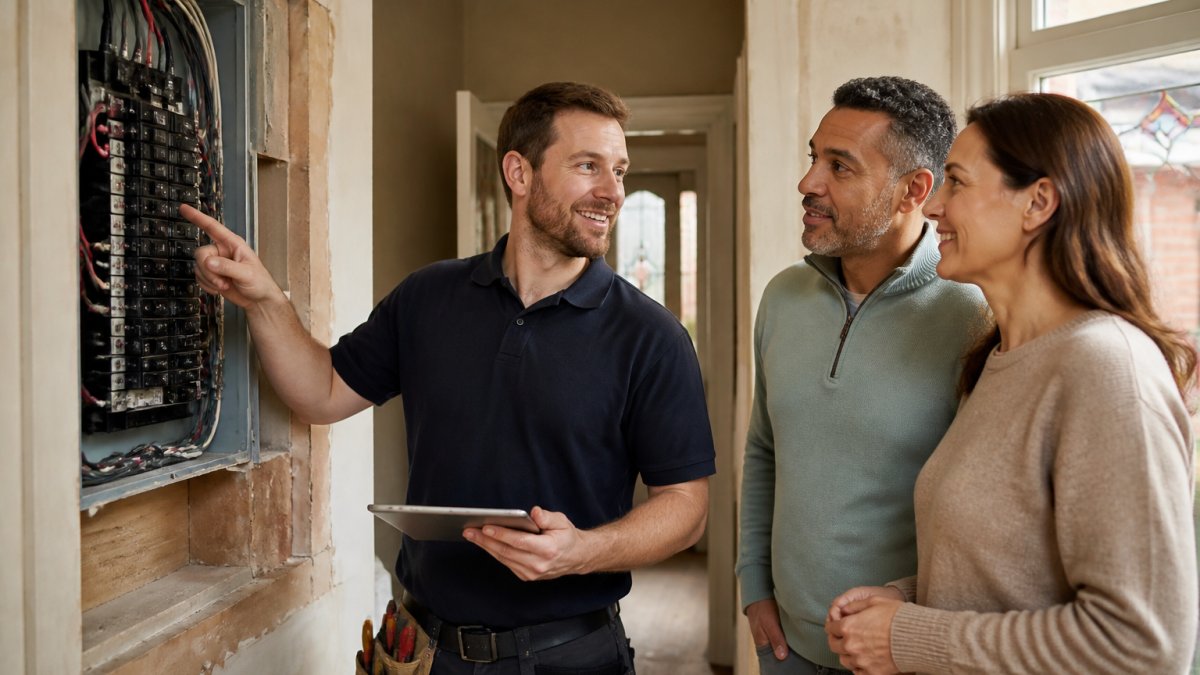
Most reputable installers will survey before quoting. That survey checks your fuse board capacity, earthing arrangement, cable route and meter position.
What Separates a Qualified Installer From a General Electrician
A qualified EV charger installer holds specific competence for the work, not just a general electrical qualification. In practice, that means registration with a competent person scheme.
Ask three questions before booking anyone:
- Are you registered with a competent person scheme such as NAPIT or SELECT?
- Can you show your public liability insurance certificate?
- Will you notify the installation under the Scottish Building Standards and give me the certificate?
A general electrician can wire a socket. Fitting a charge point involves protective devices sized for continuous load, earthing checks, and in many cases a Distribution Network Operator notification. Test My Electrics is NAPIT and SELECT registered, is fully insured with £10 million coverage, and our engineers are 18th Edition qualified with C&G 2391-51 and 2391-52 testing certifications.
Side-by-Side Comparison of Ayrshire Charger Providers
The table below sets out who does what, so you can see at a glance which one you actually need. It is deliberately limited to providers whose role can be verified from their own published information; where a service is described as coming soon, that is stated rather than presented as available.
| Provider | Type | What They Do | Best For |
|---|---|---|---|
| Test My Electrics | Installer | Home and commercial charge point installation, testing, certification, grant paperwork | Drivers wanting a certified home or business charger |
| Charge Place Scotland | Network operator | Runs public charge points across East and South Ayrshire | Public charging while out and about |
| Believ | Network operator | Planned rollout of 600+ public points over a 15-year partnership | Future public charging provision |
| Ayrshire Roads Alliance | Information service | Publishes public charger locations and tariffs | Checking public charger costs |
| Destination South Ayrshire | Information service | Directs drivers to public charging information | South Ayrshire public charging queries |
| Arnold Clark Charge | Network operator | Ultra-rapid public charging network | Rapid top-ups on longer journeys |
| ChargeFinder.uk | Directory | Lists charging points and networks across Ayrshire | Comparing public networks before a trip |
How to Read the Comparison
The first column tells you what kind of organisation you are dealing with, and that is the column that matters most. An installer sells the wiring, the unit, the testing and the certificate. A network operator sells electricity by the kilowatt hour. An information service publishes locations and tariffs but does not fit anything. A directory lists what others provide.
If you want a home charger, only the installer row is relevant to you. If you want to know what a public charge point costs per kWh, the network operator and information service rows are the ones to check. Mixing the two is the single most common reason people spend weeks looking in the wrong place.
What the Table Does Not Tell You
A table can compare roles, but it cannot compare the quality of an installation. For that you need to check credentials, insurance, scheme registration and evidence of completed work. Our projects and case studies page shows real electrical projects across Ayrshire, including EV charging installations with scope and outcome for each, so you can see the standard of work before you commit.
Watch out: a directory listing is not an endorsement. ChargeFinder.uk and similar directories list charging points and networks; they do not verify installer competence, insurance or certification. Use them to plan a journey, not to choose who wires your consumer unit.
Public Charging Networks and Installer Services Are Not the Same Thing
Public charging networks sell electricity by the kilowatt hour. Installers sell the wiring, the unit, the testing and the certificate. That is the whole difference, and it explains why a network operator cannot quote you for a home charger no matter how many points they run locally.
A Note on Installer Comparison Sites
Before you share your details with any installer or comparison service, check who is collecting them and what they will do with them. The safest route is to check each installer directly against the credentials listed in our vetting checklist below.
What EV Charger Installation Costs in Ayrshire Depend On
EV charger installation costs vary with the property. Two houses on the same street can attract very different quotes because the deciding factors sit inside the building. What follows is a practical guide to what moves the price, so you can read a quote and see where the money is going.
The main cost drivers are:
- Cable run length. A charger on the outside of the wall behind the consumer unit is quick. A detached garage forty metres away is not. Cable, containment, labour and voltage-drop checks all scale with distance, and a long run may need a larger cable size to keep the installation compliant.
- Fuse board capacity. Older boards may need an upgrade or a dedicated spare way before a charger can be added. A board with no spare way means either a new consumer unit or a separate enclosure, and that is a materials-and-labour cost on top of the charger itself.
- Earthing arrangement. Some properties need an earth rod installed to meet the requirements for charge point protection. The rod, the pit, the testing and the bonding all add cost, and the need for it is not always obvious until the survey.
- Unit choice. A 7kW unit costs less than a 22kW three-phase model, and tethered cables cost more than untethered. Smart features, load management and app connectivity also move the price. The unit is often the smallest part of the bill; the installation is the larger part.
- Remedial work. If an EICR throws up issues, those need fixing before a new circuit goes in. A code C2 observation on an existing circuit, for example, has to be resolved before the charger can be certified.
- Grant support. The rules change, so check current eligibility rather than relying on last year's figures. Our guide to EV charger installation grants walks through the application step by step.
How the Quote Is Built
A reputable installer builds the quote from the survey, not from a price list. The survey records the cable route, the fuse board condition, the earthing arrangement and the meter position. Those four items determine most of the labour and materials. A quote that does not specify the cable route and the unit model is not a quote you can compare against another.
Watch out: the cheapest quote often excludes the earth rod, the fuse board work or the certification, and those appear as extras once the van is on your drive. Ask for a written quote that states what is included and what is excluded, and compare like with like.
What You Should Not Pay For
You should not pay a premium for paperwork that is a legal requirement. Building standards notification, the installation certificate and the test results are part of the job, not an optional extra. If an installer quotes those as add-ons, treat that as a warning sign. Equally, you should not pay for a survey that is really a sales visit; a proper survey produces a written quote with the cable route and unit model specified.
We are happy to talk you through pricing once we have seen the property. Visit our website for current prices or to request a quote.
Home EV Charging Point Regulations You Need to Meet
Home EV charging point regulations in the UK centre on one document: the IET Code of Practice for Electric Vehicle Charging Equipment Installation. It sets out how chargers must be protected, earthed and installed, and it is the standard an installer works to.
Three requirements catch people out:
- Building regulations compliance. Domestic charge point installation is notifiable work under the Building Regulations. You should receive a certificate confirming compliance.
- Protective devices. Charge points need protection against DC fault currents, usually built into the unit or provided by a dedicated device.
- Earthing. Where the property's earthing cannot safely support a charge point, a protective earth arrangement must be installed.
Watch out: an installer who offers to "just wire it into the existing outdoor socket circuit" is cutting corners. A charge point pulls continuous current for hours, and a circuit sized for a lawnmower is not sized for that.
EV Charger Installation Timeframes From Quote to Commissioning
EV charger installation timeframes run from about a week to a month in most cases, and the wiring itself is rarely the slow part. The survey, the quote, the grant application and any remedial work set the pace.
A typical sequence looks like this:
- Survey and quote: usually within a few days of your enquiry.
- Grant application, where applicable: this can add a short wait while approval comes through.
- Remedial electrical work, if needed: a fuse board upgrade or earthing work adds time.
- Installation day: a straightforward domestic install is generally completed in a single visit.
- Certification: test results and the compliance certificate follow shortly after commissioning.
If your property needs a new consumer unit or an earth rod, expect the job to stretch. We would rather tell you that at survey stage than discover it halfway through the day.
Home Charging or Public Charging: Which Suits Your Driving
Home charging suits most drivers who have off-street parking and a commute under roughly the range of a single overnight charge. You plug in, you wake up full, and you rarely think about it again.
Public charging suits three groups: drivers without a driveway, high-mileage drivers who need top-ups during the day, and anyone on a long journey. Rapid charging is fast but costs more per kWh than charging at home, and it puts more load on the battery over time.
A quick way to decide:
- Driveway or garage, regular commute: home charger, without question.
- Flats or terraced street with no parking: public charging plus workplace charging where available.
- Mixed pattern: home charger as the base, public rapid for longer trips.
The two are not in competition. Most EV owners use both, and the split depends on where the car spends its nights.
How to Choose an EV Charger Installer in Ayrshire
Choosing an installer comes down to credentials, evidence and how they behave before you have paid them anything. The electrical work is regulated; the sales approach is not, so check both.
Our checklist for vetting anyone who quotes you:
- Confirm they are UKAS accredited or registered with a recognised competent person scheme
- Ask for proof of public liability insurance
- Read recent reviews, not just the star average
- Ask whether they will handle the grant application or leave it to you
- Confirm they will issue a certificate and notify the work under Part P
- Ask what happens if the charger develops a fault in the first year
- Get the quote in writing with the cable route and unit model specified
What most guides miss is the aftercare question. A charger is a piece of equipment with a warranty and, eventually, a fault. Ask who you call when it stops working, and get the answer before you book. Our article on EV charging installation mistakes covers the other traps we see most often.
A common mistake is choosing on price alone. The cheapest quote often excludes the earth rod, the fuse board work or the certification, and those appear as extras once the van is on your drive.
Book Your EV Charger Installation With Test My Electrics
The gap between a good installation and a cheap one shows up years later, usually when something fails or when a certificate is needed and cannot be found. We would rather do the job properly once.
Test My Electrics installs EV charging points across Ayrshire. We are UKAS accredited, NAPIT and SELECT registered, and fully insured to £10 million. Our team is 18th Edition qualified and holds C&G 2391-51 and 2391-52 testing certifications. We also carry a 4.9 rating from 321 reviews.
If you are ready to move, our Ayr electrician page has the contact details and the full list of EV charger services, including grant support.
Charging at home should be the simplest part of running an electric car. If you want a survey, a straight answer on cost and a certified installation, get in touch. We will check your fuse board, confirm what your property needs, and book the work around you. Get started with Test My Electrics and charge at home with confidence.
Frequently Asked Questions
Do I need a certified electrician to install an EV charger at home?
Yes. A home charge point must be fitted by a competent, qualified electrician who can certify the work and notify your local authority where building regulations require it. At Test My Electrics we are UKAS accredited, SELECT and NAPIT registered, and hold 18th Edition and C&G 2391-51/2391-52 qualifications. Ask any installer for their registration numbers before booking, and check they carry public liability insurance. A general handyman or an unregistered fitter cannot sign off the installation, which can cause problems when you sell the property or make an insurance claim.
How much does EV charger installation cost in Ayrshire?
EV charger installation costs vary with the charger you choose, the cable run from your consumer unit, whether your supply needs upgrading, and any groundworks for a detached garage or driveway. Test My Electrics does not publish fixed prices because every property differs. Visit our website for current prices or to request a quote.
Are there government grants for home EV charger installation?
Grant schemes change, and eligibility usually depends on your property type, whether you have off-street parking, and whether you already have a charge point. Landlords, flat owners and people in rented accommodation often face different rules from owner-occupiers. Ask about current eligibility when you request your quote.
How long does an EV charger installation take?
Book a survey first so the installer can confirm the realistic timescale for your property.