 listicle
Electrical Inspection Checklist for Landlords (2026)
Table of Contents
- Why Landlords Need a Formal Electrical Inspection Checklist
- The Legal Side: EICR Requirements for Landlords Explained
- Your 10-Point Electrical Inspection Checklist for Landlords
- How Long Does an EICR Take and How to Prepare
- Handling Remedial Electrical Work for Landlords
- Common Mistakes Landlords Make With Electrical Safety
- Conclusion: Book Your Inspection and Stay Compliant
- Frequently Asked Questions
Last Updated: September 7, 2026
An electrical inspection checklist for landlords is the practical tool that turns a legal obligation into a repeatable, manageable process. It helps you track visual checks between formal inspections, prepare properly for your five-yearly Electrical Installation Condition Report (EICR), and respond quickly when remedial work is flagged. This guide from Test My Electrics walks through the full checklist, the legal background, and the steps to stay compliant without the stress.
Every rental property in scope must have a valid EICR, and enforcement is real. Getting this wrong risks fines, invalidated insurance, and, most seriously, the safety of your tenants. Below, we show you exactly how to build your own inspection routine, what the formal EICR test covers, and how to handle any issues it uncovers.
Why Landlords Need a Formal Electrical Inspection Checklist
A formal checklist does more than satisfy paperwork. It creates a documented trail showing you take your duty of care seriously, which matters if there is ever a dispute or an incident. Without one, you are relying on memory and guesswork across what might be several properties.
The practical benefit is consistency. A structured electrical inspection checklist ensures you check the same things each time, in the same order, so nothing gets missed between the legally required five-yearly inspections. It also makes it easier to spot deterioration early, before a minor fault becomes a costly repair or a safety hazard.
For landlords managing multiple properties, the checklist becomes your central record. It tells you which property had a loose socket, which needs a new consumer unit, and what the electrician flagged last time. That record is invaluable when planning budgets or dealing with tenant queries.
The Legal Side: EICR Requirements for Landlords Explained
The EICR is the formal inspection that sits at the heart of your obligations. Under the Electrical Safety Standards Regulations, landlords must ensure the electrical installations in their rented properties are inspected and tested at least every five years by a qualified person (gov.uk). The regulations apply to tenancies and require you to provide a copy of the report to tenants and to the local authority upon request.
The report itself is a detailed assessment of the fixed wiring, consumer unit, and installed equipment. The electrician will code any findings, with C1 meaning danger present, C2 meaning potentially dangerous, and C3 meaning improvement recommended. Only a C1 or C2 finding requires immediate remedial action before the report can be signed off as satisfactory.
Most landlords find the enforcement is taken seriously, and the potential penalties for non-compliance are not trivial. Beyond the fine, an invalid EICR can void your insurance, leaving you exposed to significant liability if something goes wrong. The guidance on electrical safety in the private rented sector sets out the full scope of landlord duties.
Your 10-Point Electrical Inspection Checklist for Landlords
This is the core routine to run at each property. It combines quick visual checks you can do yourself with a clear understanding of what the formal EICR test covers.
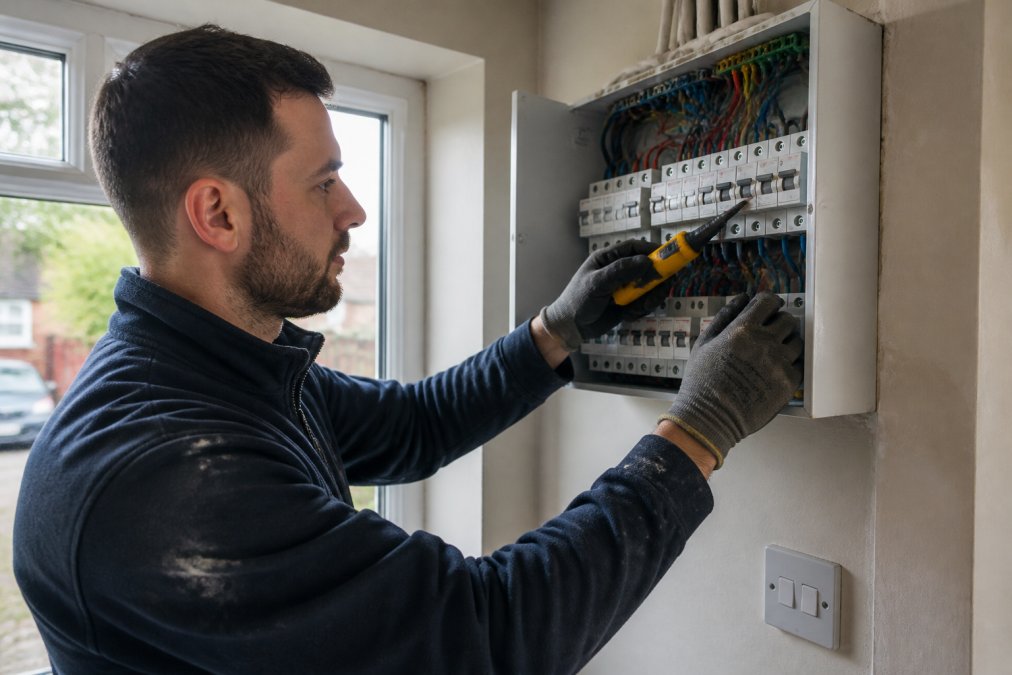
Visual Checks Between Formal Inspections
These are checks you or your letting agent can carry out at each tenancy change or at least annually. They are not a substitute for the EICR, but they catch obvious problems early.
- Check the consumer unit for signs of overheating, burn marks, or a tripping circuit breaker that resets itself.
- Look at every socket and switch for damage, cracks, or discolouration, and confirm no socket is overloaded with adapters.
- Inspect all visible wiring for frayed insulation, exposed copper, or cables that have been chewed by pests.
- Test every residual current device (RCD) by pressing the test button. It should trip immediately; if it does not, book a formal inspection.
- Check light fittings and ceiling roses for loose fixings, flickering, or visible scorch marks.
- Confirm all outdoor sockets are weatherproof and have the correct IP rating for their location.
- Verify that no DIY wiring has been added by a previous tenant or occupant, which is a common source of danger.
- Check the earthing and bonding where visible, particularly in bathrooms and kitchens, for secure connections.
- Look for any signs of water damage near the consumer unit or sockets, which indicates a serious risk.
- Keep a dated record of each visual check, noting any issues and the action taken.
What the EICR Test Covers
The formal EICR goes far deeper than visual checks. The qualified electrician will isolate the supply, test the continuity of circuits, check the insulation resistance, and verify that the earthing and bonding meet current regulations. They will also test the operation of RCDs under load and inspect the consumer unit for compliance.
The electrician assesses the installation against the current edition of the Wiring Regulations. Any departures from the regulations are recorded, and the overall condition of the installation is given a rating. This is the document that satisfies your legal duty, so the visual checks above are about keeping the property safe between these formal assessments.
How Long Does an EICR Take and How to Prepare
An EICR on a rental property usually takes between two and four hours, depending on the size of the property and the number of circuits. A larger house with multiple bathrooms, an electric shower, and an outbuilding will take longer than a small flat.
Preparation makes the visit smoother. Ensure the electrician has clear access to the consumer unit, the loft if there is wiring there, and all sockets and switches. Let your tenants know the inspection is happening and that the power will need to be switched off for part of the test, so they can plan around it. Moving furniture away from sockets beforehand saves time on the day.
If you are coordinating access with tenants, give them plenty of notice and explain that the inspection is a legal requirement. Most tenants are cooperative once they understand the purpose is their safety. For vacant properties, the process is simpler, and the electrician can work without interruption.
Handling Remedial Electrical Work for Landlords
When the EICR comes back with C1 or C2 codes, you must act. Remedial work is not optional, and the regulations require it to be completed within a set timeframe, typically 28 days, or sooner if the danger is immediate. The electrician who carried out the inspection may issue a report that is only valid once the remedial work is done and re-tested.
A common approach is to have the same firm carry out both the inspection and any required remedial work. This avoids the delay of a second contractor needing to understand the report. It also means the original tester can re-verify their own findings, which keeps the documentation clean.
Before agreeing to any work, ask for a clear breakdown of what is essential versus what is merely recommended. A reputable electrician will distinguish between a C2 issue that needs fixing now and a C3 improvement that can be planned for. Integrity matters here, which is why many landlords choose a firm known for honest reporting rather than upselling unnecessary rewires.
Common Mistakes Landlords Make With Electrical Safety
The most frequent mistake is treating the EICR as a tick-box exercise and ignoring the visual checks in between. A property can develop a serious fault within a year of a satisfactory report, so the annual visual check is your early warning system.
Another common error is forgetting to provide the report to tenants and the local authority. The regulations require you to give a copy of the EICR to any new tenant before they move in, and to existing tenants within a set period after the inspection. Failing to do so is a breach even if the inspection itself was fine.
Some landlords also delay remedial work to save money, not realising that an unsatisfactory EICR means the property is not compliant. Insurance claims can be rejected if the property did not have a valid, satisfactory report at the time of an incident. The electrical safety guidance for landlords from the Health and Safety Executive reinforces that the duty extends beyond simply commissioning the test.
The final mistake is choosing an inspector solely on price. A proper EICR requires the right qualifications and test equipment. Using someone without the correct certification can leave you with a report that does not stand up to scrutiny.
Conclusion: Book Your Inspection and Stay Compliant
Staying on top of your electrical inspection checklist for landlords comes down to routine and reliable partners. Run your visual checks on schedule, keep clear records, and never let your EICR lapse. When the report arrives, act on C1 and C2 findings promptly, and keep the paperwork accessible for tenants and authorities.
For landlords across Ayrshire and the West of Scotland, Test My Electrics offers the full package: comprehensive EICR testing, clear reporting with no pressure to upsell, and a team that is SELECT and NAPIT registered with 18th Edition qualifications. Their integrity-first approach means you get an honest assessment of what is essential versus what can wait.
Get started with Test My Electrics and book your EICR today, so your properties stay safe, compliant, and fully protected.
Frequently Asked Questions
What are the landlord's legal responsibilities for electrical safety?
Landlords must ensure the electrical installations in their rental properties are safe. This means arranging a periodic inspection and test by a qualified person at least every 5 years, and providing the tenant with a copy of the resulting EICR before they move in. You must also act on any 'C1' or 'C2' codes found during the inspection, carrying out the required remedial electrical work within the specified timeframes.
How often must a landlord carry out an electrical inspection?
The legal requirement is to have an Electrical Installation Condition Report (EICR) carried out at least every 5 years, or at the start of a new tenancy if the existing certificate has expired. Using a formal electrical inspection checklist helps you track when each property's certificate is due, so you can schedule the next test in good time and avoid a gap in your compliance records.
What is included in an Electrical Installation Condition Report (EICR)?
An EICR is a detailed assessment of the fixed electrical installations in a property, covering the consumer unit, wiring, sockets, switches, and lighting. The electrician tests each circuit and checks for any damage or deterioration. The report will list any issues using codes from C1 (danger present) to C3 (improvement recommended), and it forms the core of your electrical inspection checklist.
What happens if a landlord fails an electrical inspection?
If the inspection reveals a 'C1' or 'C2' code, the installation is considered potentially dangerous and you must arrange remedial electrical work. A C1 fault should be made safe immediately. For C2 issues, you typically have 28 days to complete the necessary repairs. You must then get the work certified and provide the updated documentation to your tenant and the local authority if requested.