 listicle
Electrical upgrades for older homes: 7 essential improvements
Table of Contents
- Why older homes need electrical upgrades
- Signs of outdated electrical wiring in your property
- EICR requirements for older properties
- 1. Consumer unit replacement: moving beyond fuse boxes
- 2. RCD and AFDD protection for enhanced safety
- 3. Full rewiring: when partial upgrades aren't enough
- 4. Modernising sockets, switches, and lighting circuits
- 5. Surge protection and smart home integration
- Prioritising your electrical upgrades
- Frequently Asked Questions
Last Updated: September 29, 2026
Why older homes need electrical upgrades
Electrical upgrades for older homes are essential because properties built before the 1980s were designed for a different era of electricity consumption. A typical household in 1970 used a fraction of the power we demand today. Fridges, freezers, dishwashers, televisions, computers, mobile phone chargers, and heating systems were either non-existent or far less common. That ageing infrastructure now sits beneath your floorboards, struggling to handle modern demand.
The risk isn't just inconvenience. Outdated wiring degrades over decades. Insulation becomes brittle. Connections loosen. The cumulative effect is a fire hazard that insurance companies and mortgage lenders take seriously. This is why electrical upgrades for older homes have shifted from optional to essential.
At Test My Electrics, we've assessed hundreds of properties across Ayrshire and the West of Scotland. The pattern is consistent: homes over 40 years old carry electrical risks that newer properties simply don't. Many of these hazards are invisible until you know where to look.
Signs of outdated electrical wiring in your property
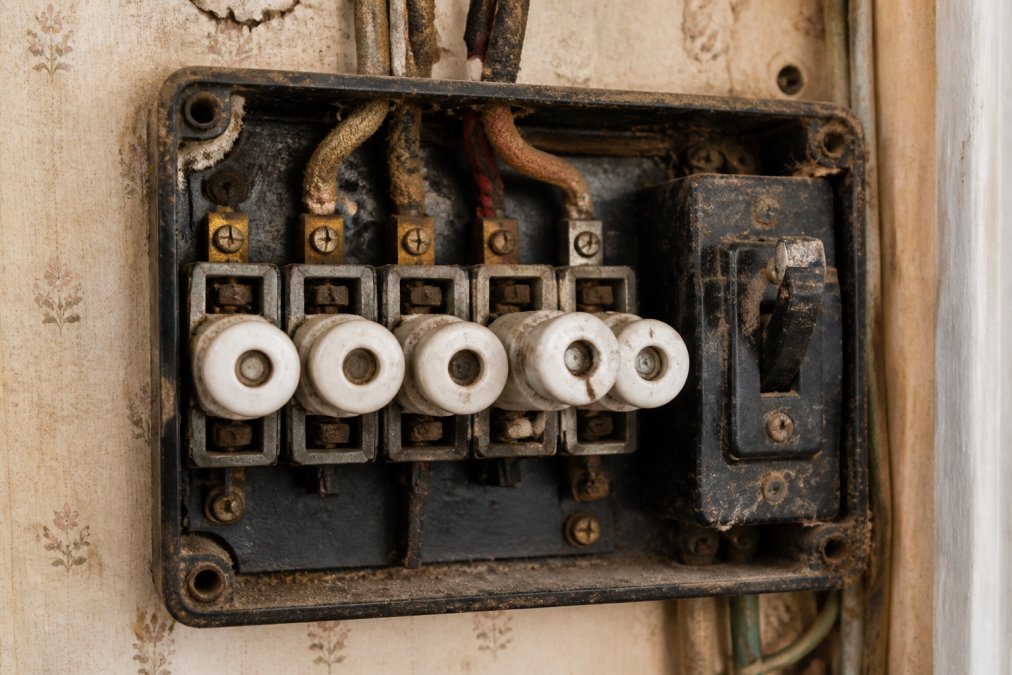
Identifying outdated wiring requires you to look beyond what's visible on the surface. The telltale signs cluster into a few clear categories.
Fuse boxes instead of consumer units. If your property still has a traditional fuse box with rewireable fuses or cartridge fuses, that's your first red flag. These were standard in homes built before the 1990s. Fuses provide basic protection, but they lack the sophisticated safety mechanisms modern consumer units offer. A blown fuse means you've had an electrical fault, but you won't know what caused it until you investigate.
Flickering lights or dimming when appliances start. This signals that your wiring can't handle the load. When you turn on an electric kettle and your lights dip noticeably, your circuits are struggling. Modern homes have circuits designed to handle multiple high-power devices simultaneously. Older homes don't.
Discoloured or cracked socket outlets. Browning around sockets indicates heat buildup inside the wall. This happens when connections have loosened over time, creating resistance. Resistance generates heat. Heat damages insulation. Damaged insulation is how fires start.
Two-pin sockets or missing earth connections. Many older homes have sockets without a proper earth pin. Modern appliances need that earth connection for safety. Adapters exist, but they're a workaround, not a solution.
Cloth or rubber insulation on visible wiring. If you can see wiring in your loft or under floorboards and it's wrapped in cloth or rubber rather than modern plastic sheathing, that's decades-old wiring. These materials degrade and crack, exposing the copper conductors beneath.
EICR requirements for older properties
An Electrical Installation Condition Report (EICR) is a professional assessment of your electrical system's safety and compliance. It's not optional for landlords, it's a legal requirement under the Electrical Safety Standards in the Private Rented Sector (England) Regulations 2020 and equivalent Scottish guidance.
For landlords, an EICR must be carried out at least every five years, or when a tenancy changes. The inspection identifies any defects, hazards, or departures from the current wiring standard (BS 7671). The report categorises findings into three levels: Code 1 (danger present, urgent remedial work needed), Code 2 (potentially dangerous, remedial work required soon), and Code 3 (improvement recommended).
Homeowners aren't legally required to have an EICR, but mortgage lenders often request one. Buyers' surveyors frequently flag electrical concerns, making an EICR a practical necessity before selling. Insurance companies may also require certification that your wiring meets current standards.
The value of an EICR lies in its transparency. You'll receive a detailed report showing exactly what's safe, what needs attention, and what can wait. This clarity helps you prioritise upgrades and budget accordingly. Rather than guessing which improvements are essential, you'll have professional guidance.
Test My Electrics provides comprehensive EICR services tailored to older properties. The assessment identifies not just immediate hazards but also the cumulative effects of ageing infrastructure, giving you a complete picture of your electrical system's condition.
1. Consumer unit replacement: moving beyond fuse boxes
A consumer unit (or distribution board) is the heart of your electrical system. It receives power from the grid and distributes it through individual circuits to different parts of your home. Modern consumer units use miniature circuit breakers (MCBs) and residual current devices (RCDs) to protect against overloads and faults. Old fuse boxes don't.
Replacing a fuse box with a modern consumer unit is often the first upgrade older homes need. The new unit will include dual RCD protection as standard, which detects earth faults instantly and cuts power before serious injury can occur. It also provides space for surge protection devices and additional safety features.
The hardware itself, units from reputable manufacturers, varies in cost. Installation by a qualified electrician typically adds significantly to that figure. However, this upgrade is foundational. Everything else you do to improve your electrical system depends on having a modern, compliant consumer unit in place.
A modern consumer unit also makes future upgrades simpler. If you later want to add EV charging, solar panels, or smart home integration, you'll have the infrastructure to support them. An old fuse box would require complete replacement anyway, making it a false economy to delay.
2. RCD and AFDD protection for enhanced safety
RCDs (residual current devices) detect when electricity is leaking to earth, a sign of a fault or damaged insulation. They trip almost instantly, cutting power before serious shock or fire can occur. Modern consumer units include dual RCD protection as standard: one for circuits serving sockets, one for lighting and fixed appliances.
AFDDs (arc fault detection devices) go further. They detect dangerous arc faults, sparks jumping across damaged connections inside walls or appliances. Arc faults are a leading cause of electrical fires in older properties. A standard circuit breaker won't catch them. An AFDD will.
The cost of adding AFDD protection to key circuits varies depending on the specific circuit and installation complexity. For older homes with degraded wiring, AFDDs on bedroom circuits and other high-risk areas provide meaningful fire protection.
This upgrade is particularly valuable if your EICR identified arc fault risks or if you're not planning a full rewire yet.
3. Full rewiring: when partial upgrades aren't enough
A full rewire replaces all the wiring in your property with modern cable that meets current safety standards. It's the most comprehensive upgrade available and the only solution if your existing wiring is severely degraded or dangerous.
4. Modernising sockets, switches, and lighting circuits
This upgrade is modular, you can do it room by room or focus on areas where you spend most time. It's less disruptive than rewiring and provides tangible improvements in safety and functionality.
5. Surge protection and smart home integration
Surge protection devices (SPDs) shield your electronics from voltage spikes caused by lightning strikes, power grid fluctuations, or switching surges from large appliances. In older homes with ageing infrastructure, these spikes are more common and more damaging.
Prioritising your electrical upgrades
The upgrades that matter most depend on your property's specific condition, your timeline, and your budget. An EICR from Test My Electrics will identify which improvements are urgent and which can be phased in over time.
| Upgrade Type | Urgency | Typical Benefit | Best For |
|---|---|---|---|
| Consumer unit replacement | High | Modern protection, future-proofing | Homes with fuse boxes |
| RCD/AFDD protection | High | Fire and shock prevention | All older homes |
| Socket and switch upgrades | Medium | Reliability and convenience | High-use areas |
| Full rewire | Medium to High | Complete modernisation | Severely degraded wiring |
| Surge protection | Medium | Equipment protection | Homes with expensive electronics |
| Smart integration | Low | Energy management | Future-focused homeowners |
Frequently Asked Questions
How do I know if my older home needs electrical upgrades?
Common signs include a fuse box instead of a modern consumer unit, two-pin sockets without earth protection, flickering lights, warm switch plates, or a burning smell near outlets. An EICR from a qualified electrician will identify specific hazards. Homes built before 1960 with original wiring almost certainly need upgrades to meet current British safety standards and reduce fire risk.
What are the EICR requirements for older properties?
An EICR (Electrical Installation Condition Report) is legally required for rental properties every 5 years under the Electrical Safety Standards in the Private Rented Sector Regulations 2020. Homeowners aren't legally required to have one, but it's strongly recommended before purchase or major renovation. The EICR identifies defects and hazards, guiding which electrical upgrades are essential versus optional improvements.
Is it worth replacing a fuse box with a modern consumer unit?
Yes. Modern consumer units with RCD (residual current device) protection dramatically reduce electrocution and fire risk compared to old fuse boxes. They provide better circuit control, accommodate modern appliance loads, and are essential for compliance with current wiring regulations. The investment protects your property, improves safety, and is often necessary before undertaking other electrical work.
Can I upgrade my electrical system in stages rather than all at once?
Yes. You can prioritise safety-critical upgrades first (consumer unit, RCD protection, dangerous wiring) before cosmetic improvements (new sockets, lighting controls). A staged approach spreads costs over time and allows you to plan funding. However, some upgrades work best together, for example, rewiring works more efficiently when combined with consumer unit replacement. A qualified electrician can advise which stages make practical sense for your property.
Older homes deserve electrical systems that match their modern use. The good news is that upgrades are modular, you don't need to do everything at once. Start with an EICR to understand your property's specific needs, then prioritise based on safety risk and your circumstances. Book an electrician today to arrange your assessment and get a clear roadmap for bringing your home's electrical system into the 21st century safely and compliantly.