 How-to
9 Steps to Find a Qualified Electrical Inspector
Last Updated: November 7, 2026
Quick Summary
To find a qualified electrical inspector, check both scheme registration and inspection-specific qualifications before you book. Ask for the Level 3 inspection and testing certificates, commonly C&G 2391-51 and C&G 2391-52, then verify the business on the scheme's public register. Confirm the individual attending holds those qualifications, not just the business.
- An electrician installs and repairs wiring, while an inspector tests it against BS 7671 and produces a formal report.
- Ask for the Level 3 inspection and testing certificates, commonly written as C&G 2391-51 and C&G 2391-52.
- Search the scheme's public register for the business name and confirm the registration is current, not lapsed.
- A business name on a scheme register does not guarantee the individual attending holds the inspection qualifications.
- An EICR typically takes a couple of hours for a standard domestic property, longer for larger or older buildings.
Table of Contents
- Why a Qualified Electrical Inspector Is Not the Same as an Electrician
- Step 1: Pin Down the Inspection Your Property Actually Needs
- Step 2: How to Check an Electrician Is Qualified Before You Call
- Step 3: Electrical Inspector Qualifications That Actually Matter
- Step 4: Verify Scheme Registration on the Competent Person Register
- Step 5: What to Ask an Electrician Before Hiring
- Step 6: Compare Quotes Without Being Led by the Cheapest Number
- Step 7: How Long Does an EICR Take and How to Plan Access
- Step 8: Read the Inspection Report and Understand the Outcomes
- Step 9: Book Your EICR with a Local, Registered Team
- Frequently Asked Questions
Why a Qualified Electrical Inspector Is Not the Same as an Electrician
A qualified electrical inspector is a registered electrician who holds specific inspection and testing qualifications, and that distinction matters more than most homeowners realise. Any competent electrician can wire a socket. Far fewer can legally and properly produce an Electrical Installation Condition Report (EICR).
Here is the difference in plain terms. An electrician installs, repairs and maintains wiring. An inspector tests that wiring against BS 7671, the wiring regulations, and then puts their name to a formal report. That report is what your landlord compliance, your insurer and your buyer actually want to see.
Inspections of this kind are carried out across Ayrshire and the West of Scotland, and a common mistake is booking the cheapest general electrician and getting a report that a letting agent or solicitor later rejects.
So how do you avoid that? Below, we'll walk through nine steps that take you from "I need an inspection" to a report you can actually use. But first, here's what most guides get wrong: they treat registration as the finish line. It is only the starting point.
Step 1: Pin Down the Inspection Your Property Actually Needs
Before you search for anyone, work out what you are actually buying. The right inspection depends on the property and why you need it.
- Rental property: you need an EICR, and in Scotland landlords must have one done at set intervals and provide a copy to tenants.
- Homebuyer or renovation: a pre-purchase or pre-works inspection flags faults before money changes hands.
- Commercial premises: inspections keep insurance valid and satisfy licensing conditions.
- Older property: more circuits, older consumer units and DIY history mean more testing time.
Getting this wrong wastes money. An EICR on a large commercial unit is a different job from a flat above a shop. Write down the property type, its rough age, and the reason for the inspection before you call anyone.
Step 2: How to Check an Electrician Is Qualified Before You Call
Checking an electrician is qualified starts with two things: scheme membership and inspection-specific qualifications. Ask for both before you book, not after. A general electrician may hold no inspection qualification at all. That is legal for basic work but not good enough for a proper EICR.
Use this practical checklist to verify credentials before you commit. Ask for each item and confirm it yourself rather than taking a verbal assurance.
- Scheme registration: Ask which recognised competent person scheme the business belongs to, then search that scheme's public register for the business name. Confirm the registration is current, not lapsed, and that the scope covers inspection and testing rather than installation only.
- Inspection and testing qualifications: Ask specifically for the Level 3 inspection and testing certificates, commonly written as C&G 2391-51 and C&G 2391-52. These cover periodic inspection and initial verification. A general electrician may hold neither.
- Wiring regulations training: Confirm training to the current edition of BS 7671, the wiring regulations. The 18th Edition is the edition most practitioners currently work to, and you should ask when the inspector last updated their training.
- Relevant experience: Ask how long they have been carrying out inspection and testing specifically, and on what property types. A qualification proves someone passed an exam; it does not prove they have tested hundreds of installations.
- Insurance: Ask for evidence of public liability insurance and confirm the cover is current. This protects you if something goes wrong during the visit.
- Scope of the requested inspection: Confirm the inspector has experience of the specific job you need, whether that is a domestic EICR, a commercial premises or a pre-purchase inspection. Competence on one property type does not automatically transfer to another.
A common pattern is for homeowners to check only scheme membership and stop there. That confirms the business is registered for electrical work generally, but it does not confirm the individual carrying out the inspection holds the inspection and testing qualifications or has the experience your property needs. Verify both the business and the person.
Watch out: a business name appearing on a scheme register does not guarantee that the individual who turns up holds the inspection qualifications you asked about. Ask for the name of the person attending and confirm their credentials directly.
We go deeper on this in our guide to finding a qualified electrician for an EICR, which walks through the exact checks and what each one proves.
Step 3: Electrical Inspector Qualifications That Actually Matter
The qualifications that matter most are the Level 3 inspection and testing certificates, often written as C&G 2391-51 and C&G 2391-52. These are the ones that cover periodic inspection and initial verification.
Beyond that, look for:
- 18th Edition wiring regulations training, which covers BS 7671
- Practical experience on the property type you own
- Scheme registration with a body recognised for inspection work
What most guides miss is that a qualification alone proves someone passed an exam. It does not prove they have tested hundreds of installations. Ask how long they have been doing inspection and testing specifically. A newly qualified inspector is not necessarily a bad choice, but you should know what you are getting.
Step 4: Verify Scheme Registration on the Competent Person Register
Scheme registration is the single easiest thing to verify, and the one most people skip. Recognised competent person schemes keep public registers you can search by business name or location.
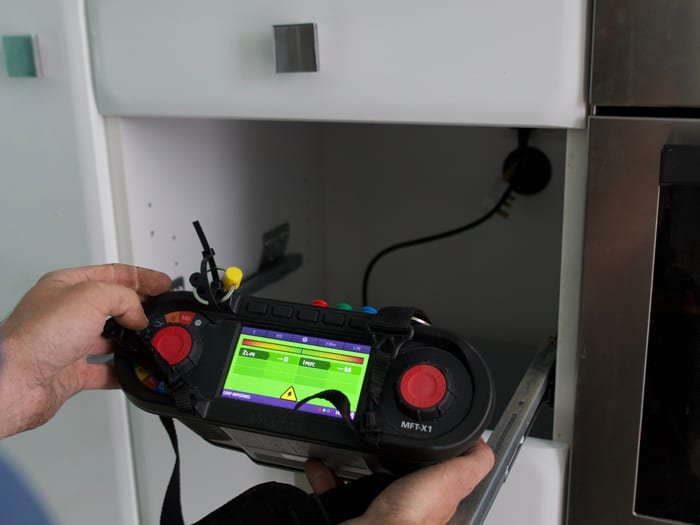
Here is how to check it in a few minutes:
- Ask the electrician which scheme they belong to.
- Search that scheme's register for the business name.
- Confirm the registration is current, not lapsed.
- Check the scope covers inspection and testing.
If the name is not on the register, walk away. It is that simple. A legitimate business will happily give you their scheme details because it is a selling point.
Step 5: What to Ask an Electrician Before Hiring
The questions you ask before hiring tell you as much as the answers. A good inspector will welcome them.
Ask these:
- Which inspection qualifications do you hold?
- Are you registered, and with which scheme?
- What is included in the report, and what costs extra?
- Will you carry out any remedial work you recommend?
- Can you provide references from other landlords?
- How do you handle access and tenants?
That last one matters if you rent out the property. We cover more of these in our checklist of things to check before hiring an electrician, which you can run through before any call.
Watch out: if the person quoting also stands to profit from a large rewire, ask directly whether they will recommend only essential work. An honest inspector separates "dangerous" from "could do with updating."
Step 6: Compare Quotes Without Being Led by the Cheapest Number
Comparing quotes is where most people go wrong, because the cheapest number is rarely the full story. Quotes vary for real reasons, and you need to compare like for like. A useful quote should specify the property size, the inspection scope, the report, any exclusions and any follow-up charges, so you can see exactly what you are paying for.
Ask each electrician to put the quote in writing and confirm that it covers:
- The full inspection and testing of all circuits, not a sample. Ask how many circuits are included and whether any are excluded.
- The written EICR report itself, including whether it is issued as a PDF, a printed copy or both.
- The property size and type the price is based on, so you can compare quotes for the same job rather than for different assumptions.
- Access equipment or disruption costs, such as the need to move furniture, isolate power or work around tenants.
- Remedial work, priced separately and clearly marked as optional or essential, so you can see whether the inspector has an incentive to recommend extra work.
- Follow-up charges, such as a re-inspection fee if remedial work is needed before the report can be relied on.
A quote that looks low may exclude the report, cover only a sample of circuits or assume easy access that your property does not have. Ask each electrician to confirm exactly what is included and what would cost extra. Then compare on scope, not just price.
Pricing depends on the size and age of the property and the number of circuits, so ask for a written quote rather than a phone estimate. Test My Electrics' current prices are available on request.
Watch out: a quote that bundles the inspection and any remedial work into one figure makes it hard to tell whether the inspector has an incentive to find faults. Ask for the inspection and the remedial work to be priced separately.
Step 7: How Long Does an EICR Take and How to Plan Access
An EICR typically takes a couple of hours for a standard domestic property, longer for larger or older buildings with more circuits. The testing itself is only part of it; the inspector also needs to inspect, note and then write up findings.
Plan access properly:
- Confirm whether power will be off at any point.
- Warn tenants in advance and agree a time.
- Clear access to the consumer unit and any outbuildings.
- Allow extra time for a large or commercial property.
Our dedicated guide on how long an EICR inspection takes breaks down timings by property type so you can plan around tenants and access.
Step 8: Read the Inspection Report and Understand the Outcomes
Reading the report properly is how you turn an inspection into action. The EICR grades findings using codes, and those codes tell you what is urgent.
- C1: danger present, needs immediate action
- C2: potentially dangerous, needs urgent remedial work
- C3: improvement recommended, not immediately dangerous
- FI: further investigation needed
A satisfactory report means no C1 or C2 findings. An unsatisfactory one means work is needed before the report can be relied on. If your report comes back unsatisfactory, do not panic and do not rush into a full rewire on the spot. Read the codes, ask what each finding means, and separate essential safety work from optional upgrades.
For a full walkthrough of what each code means, see our guide on how to read EICR report results.
Step 9: Book Your EICR with a Local, Registered Team
Booking the inspection is the easy part once you know what to check. Choose a local, registered team who can show their qualifications and explain the report.
Here is a quick summary of the whole process:
| Step | What you do | Why it matters |
|---|---|---|
| 1 | Identify the inspection type | Avoids paying for the wrong job |
| 2-3 | Check qualifications | Confirms inspection competence |
| 4 | Verify scheme registration | Proves current, valid registration |
| 5 | Ask questions | Reveals honesty and scope |
| 6 | Compare quotes | Prevents cheap-but-incomplete jobs |
| 7 | Plan access | Keeps the visit on schedule |
| 8 | Read the report | Turns findings into action |
Test My Electrics is UKAS accredited and SELECT and NAPIT registered, with 18th Edition qualified inspectors holding C&G 2391-51 and C&G 2391-52. We are fully insured with £10 million cover and rated 4.9 from 321 reviews. Our integrity-first approach means we report what is essential.
The real challenge is not finding an electrician; it is finding one who will test honestly and tell you the truth about what your property needs. That is exactly what we do. Test My Electrics provides comprehensive EICRs, clear reporting on your system's status, and minimal disruption, all backed by our £10 million insurance and local team across Ayrshire and the West of Scotland. Get started with Test My Electrics and book an inspection you can trust.
Frequently Asked Questions
How do I check whether an electrical inspector is qualified?
Start with the registration scheme register. Ask for the inspector's scheme name and membership number, then search that register directly rather than relying on a logo on a van. Confirm they hold BS 7671 18th Edition and inspection and testing certificates such as C&G 2391. Ask which types of property and installation they routinely inspect, and request their public liability insurance details. A qualified electrical inspector should answer all of this without hesitation and point you to verifiable records.
Can any electrician carry out an electrical inspection?
No. Installing and inspecting are different skills. An electrician can wire a circuit competently and still not hold the inspection and testing qualifications needed to produce a defensible EICR. Look for specific inspection and testing certification, experience with the property type, and membership of a competent person scheme that covers periodic inspection. If someone cannot explain the difference between their installation work and their inspection credentials, keep looking.
What should I ask before booking an EICR?
Ask what the quote covers: how many circuits, whether the consumer unit is included, and whether the report is issued with clear observations coded C1, C2, C3 or FI. Confirm how long the visit takes, what access you need to arrange, and whether remedial work is quoted separately. Ask for references from similar properties and check the scheme register yourself. A transparent inspector will welcome these questions and give straight answers.
How often should a rented property's electrical installation be inspected?
Landlords should have the electrical installation inspected and tested at the intervals set out in current Scottish law; check the official guidance for the current requirement. Shorter intervals may be recommended in the report where the installation is older, has been altered, or serves higher-risk use. Keep the certificate and give a copy to tenants. Diarise the renewal date so compliance does not lapse between tenancies or during a change of managing agent.