 how-to
How to Read EICR Report Results
Table of Contents
- What an EICR Report Contains
- Understanding EICR C1, C2, C3 Codes Explained
- What Is a Satisfactory EICR
- EICR Remedial Works Requirements
- Interpreting Your EICR Report Results
- Next Steps After Receiving Your EICR Report
- Frequently Asked Questions
Last Updated: 4 September 2026
An Electrical Installation Condition Report (EICR) can look like a wall of technical jargon, but learning how to read EICR report results is essential for any landlord, homeowner, or business owner in the UK. This guide from Test My Electrics breaks down every observation code and classification so you know exactly what your electrician is telling you.
The purpose of an EICR is straightforward: it identifies whether your property's fixed electrical installations are safe for continued use. Rather than leaving you puzzled by abbreviations, we will explain what each code means, what counts as a satisfactory outcome, and the legal requirements for fixing any issues that surface.
What an EICR Report Contains
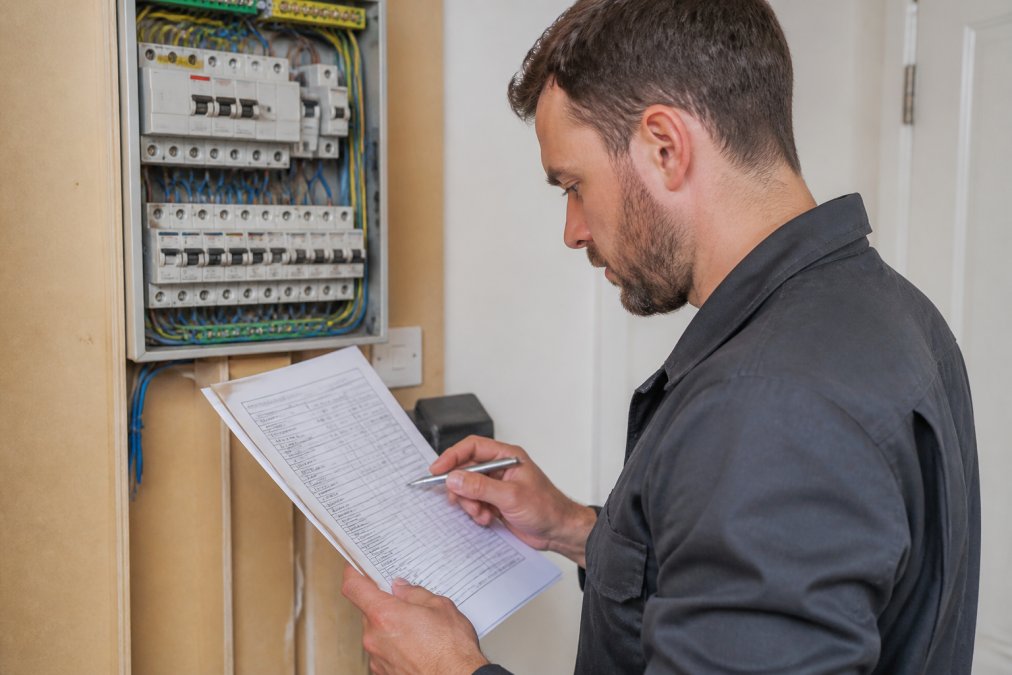
An EICR is a formal document produced after a qualified electrician inspects and tests the fixed wiring, consumer unit, and connected circuits. The report opens with basic property details and the overall outcome, followed by a list of individual observations. Each observation describes a specific defect, such as damaged cabling, an outdated consumer unit, or missing earth bonding, and assigns it a classification code.
These codes are the core of reading EICR report results. They tell you how urgent each problem is and whether it poses an immediate safety risk. The electrician will also note which circuits were tested and record the results of those tests, giving you a complete picture of the installation's condition.
Understanding EICR C1, C2, C3 Codes Explained
The classification system is standardised across the industry, so any registered electrician will use the same codes. There are three main codes plus one additional flag for situations that need more investigation. Knowing what each one means helps you prioritise the necessary work.

C1: Danger Present
A C1 code means danger exists and immediate action is required. This classification indicates that the defect poses a direct risk of injury or fire, and anyone using the installation could be in danger. A common example is exposed live wires or a severely damaged consumer unit where contact with a live part is possible.
If your report contains a C1, you should not use the affected circuit until it has been made safe. The electrician is expected to isolate the supply or take temporary measures at the time of the inspection. You must arrange for a registered electrician to carry out the remedial work without delay.
C2: Potentially Dangerous
A C2 code indicates a defect that is potentially dangerous. While there is no immediate threat, the issue could become serious under fault conditions or through reasonable use. Examples include missing earthing on sockets, inadequate bonding in a bathroom, or a consumer unit that does not meet current regulations.
The key point with a C2 is that your installation may not comply with the current edition of the Wiring Regulations. This classification usually results in an unsatisfactory overall outcome, meaning you are legally required to address the findings, particularly if you are a landlord.
C3: Minor Issues
A C3 code flags a minor issue that does not currently compromise safety but falls short of recommended best practice. These are improvement recommendations rather than urgent defects. Examples might include a socket not fitted with a protective shutter or a light fitting that lacks an earth terminal.
You are not legally required to fix a C3, but addressing them improves the standard of your installation. Many landlords choose to remedy C3 items during planned maintenance to keep properties in top condition and avoid surprises at the next inspection.
FI: Further Investigation Needed
The FI code stands for Further Investigation. An electrician applies this when they cannot fully assess a circuit or component without additional work. This often happens when a circuit is inaccessible, shows unusual test results, or when damage is suspected but not visible.
An FI finding means the report cannot be given a satisfactory status until the investigation is completed. You will need to allow access for the electrician to carry out the extra checks, which may involve lifting floorboards, chasing cables, or opening up parts of the building fabric.
What Is a Satisfactory EICR
A satisfactory EICR means the inspection found no C1 or C2 defects and no FI codes requiring further investigation. The installation is considered safe for continued use, and any C3 minor issues noted do not prevent a satisfactory outcome.
For landlords, a satisfactory EICR is the goal. It satisfies your legal duty under the Electrical Safety Standards Regulations to ensure the electrical installations in your rental property are safe (legislation.gov.uk). The report itself should be kept and provided to your tenants and, when requested, to the local authority.
EICR Remedial Works Requirements
When your report comes back unsatisfactory, remedial works are required. The term covers any work needed to remove the C1 and C2 dangers identified during the inspection. This could range from replacing a single damaged socket to a full rewire, depending on the age and condition of the installation.
The scope of remedial work is dictated entirely by the findings in the report. A competent electrician will quote for the specific items listed, not for unnecessary extras. An integrity-first approach means you should only pay for what is genuinely required to bring the property up to a safe and compliant standard.
Timescales for Fixing Issues
The urgency of remedial works depends on the classification. A C1 danger must be dealt with immediately, before the affected circuit is used again. For C2 potentially dangerous defects, the work should be completed within 28 days of the report date, or sooner if the local authority or your insurer requires it (legislation.gov.uk).
Landlords should note that the law does not give a fixed grace period for C2 items. The requirement is to complete remedial works within 28 days, but you must also provide the written confirmation of completion to your tenants and the local authority within that same period.
Who Can Carry Out Remedial Works
Remedial works must be carried out by a qualified and competent electrician. For most domestic and commercial work, this means someone registered with a recognised competent person scheme, such as NAPIT or SELECT (napit.org.uk). These schemes confirm the electrician is assessed for technical competence and carries appropriate insurance.
After the work is complete, the electrician should issue a new EICR or an updated certificate confirming the defects have been rectified. You should keep this documentation safely, as it forms part of your compliance records.
Interpreting Your EICR Report Results
To read EICR report outcomes correctly, start by looking at the overall conclusion on the first page. It will state either Satisfactory or Unsatisfactory. Then review each observation, matching the code to the explanations above to understand the severity.
A common mistake is assuming that any defect means the property is dangerous. In practice, a report with only C3 minor issues is still satisfactory and requires no immediate action. Conversely, a single C2 finding makes the report unsatisfactory and triggers your legal obligation to fix it.
The following table summarises how to respond to each code:
| Code | Meaning | Required Action | Legal Timescale |
|---|---|---|---|
| C1 | Danger present | Isolate circuit, arrange urgent repair | Immediate |
| C2 | Potentially dangerous | Arrange remedial works | Within 28 days |
| C3 | Minor improvement advised | Optional, plan for future | None |
| FI | Further investigation needed | Allow access for extra testing | Before re-assessment |
Next Steps After Receiving Your EICR Report
Once you have the report, the first step is to identify any C1 or C2 codes. If present, contact a registered electrician to arrange remedial works. If the report is satisfactory, file it safely and set a reminder for your next inspection, which for rental properties is typically due every five years or on change of tenancy.
For landlords managing multiple properties, keeping a digital copy of each certificate alongside the property's gas safety record and other compliance documents makes renewals far simpler. When you need to book an inspection or arrange remedial works, choose a provider registered with a competent person scheme and check that their engineers hold relevant qualifications.
Our team at Test My Electrics carries out EICRs across Ayrshire and the West of Scotland for landlords, homeowners, and commercial property owners. As a SELECT and NAPIT registered business with 18th Edition qualified engineers, we provide clear, honest reporting with no pressure to upsell. We also offer the full range of remedial works, from minor repairs to complete rewires, so you have a single accountable point of contact.
Frequently Asked Questions
What do the EICR observation codes C1, C2, and C3 mean?
C1 indicates danger present and requires immediate action to prevent risk of injury or fire. C2 means potentially dangerous conditions that must be corrected. C3 covers minor issues that don't pose immediate risk but should be addressed during planned maintenance. Each code determines the urgency and timescale for remedial works.
What is a satisfactory EICR report?
A satisfactory EICR means the electrical installation is safe for use and complies with current standards. It may contain C3 observations (minor issues) but no C1 or C2 findings. A satisfactory report confirms your property meets legal safety requirements and is suitable for occupation or letting.
How long do I have to fix C2 issues on an EICR?
C2 issues must be corrected. The exact timescale depends on your circumstances, but the work cannot be delayed indefinitely, C2 findings represent potentially dangerous conditions that need prompt attention.
Can I fix EICR remedial works myself?
C1 and C2 remedial works must be carried out by a qualified electrician registered with a competent person scheme such as NAPIT or SELECT. C3 observations may sometimes be addressed by a competent DIYer, but most remedial work requires professional certification to ensure compliance and maintain your legal protection.
An EICR report only protects you if you act on its findings. The difference between a C1 and a C3 code determines whether you have a same-day emergency or a scheduled improvement. Test My Electrics helps you navigate that process with clarity, backed by UKAS accreditation, full £10 million insurance cover, and a 4.9 rating from 321 reviews. Get started with Test My Electrics and book your electrical safety inspection today.
This article was written using GrandRanker
Frequently Asked Questions
Q: What do the EICR observation codes C1, C2, and C3 mean?
A: C1 indicates danger present and requires immediate action to prevent risk of injury or fire. C2 means potentially dangerous conditions that must be corrected. C3 covers minor issues that don't pose immediate risk but should be addressed during planned maintenance. Each code determines the urgency and timescale for remedial works.
Q: What is a satisfactory EICR report?
A: A satisfactory EICR means the electrical installation is safe for use and complies with current standards. It may contain C3 observations (minor issues) but no C1 or C2 findings. A satisfactory report confirms your property meets legal safety requirements and is suitable for occupation or letting.
Q: How long do I have to fix C2 issues on an EICR?
A: C2 issues must be corrected. The exact timescale depends on your circumstances, but the work cannot be delayed indefinitely—C2 findings represent potentially dangerous conditions that need prompt attention.
Q: Can I fix EICR remedial works myself?
A: C1 and C2 remedial works must be carried out by a qualified electrician registered with a competent person scheme such as NAPIT or SELECT. C3 observations may sometimes be addressed by a competent DIYer, but most remedial work requires professional certification to ensure compliance and maintain your legal protection.