 ultimate-guide
Landlord Electrical Safety Requirements Scotland 2026
Table of Contents
- What Landlord Electrical Safety Requirements in Scotland Mean for 2026
- The Repairing Standard and Your Legal Duty
- How Long Does an EICR Last for Landlords?
- Your Electrical Inspection Checklist for Landlords
- EICR Remedial Work Requirements: Fixing What Fails
- The Cost of Non-Compliance: Fines and Enforcement
- What Is Changing in 2026 and How to Prepare
- Your Next Step for Compliance
- Frequently Asked Questions
Last Updated: 6 September 2026
What Landlord Electrical Safety Requirements in Scotland Mean for 2026
Landlord electrical safety requirements Scotland 2026 centre on one non-negotiable rule: every private rented property must have a valid Electrical Installation Condition Report (EICR) carried out by a qualified electrician at least every five years. This obligation sits within the Repairing Standard, which has governed rented housing since 2007 and was strengthened in 2024 to close loopholes around electrical safety. For landlords, this is not optional paperwork; it is a legal duty enforced by local authority housing officers.
Most landlords assume that as long as nothing is visibly wrong, they are compliant. In practice, the law requires proactive testing of the fixed wiring, not reactive fixes when a tenant reports a problem. The electrical inspection checklist for landlords starts with understanding that the EICR is the foundation document for everything else.
The responsibility applies to you whether you let a single flat or manage a portfolio of fifteen houses. The standard does not scale down for smaller landlords, and enforcement does not distinguish between the accidental omission and the deliberate breach.
The Repairing Standard and Your Legal Duty
The Repairing Standard is the legal benchmark for private rented housing in Scotland, and it explicitly requires that installations for the supply of electricity are safe and in a reasonable state of repair. Since March 2024, the standard has required landlords to ensure an EICR has been carried out within the preceding five years, and to provide a copy to tenants at the start of a tenancy and to any prospective tenant upon request. The Scottish Government guidance on the Repairing Standard confirms that electrical installations must be checked by a qualified person.
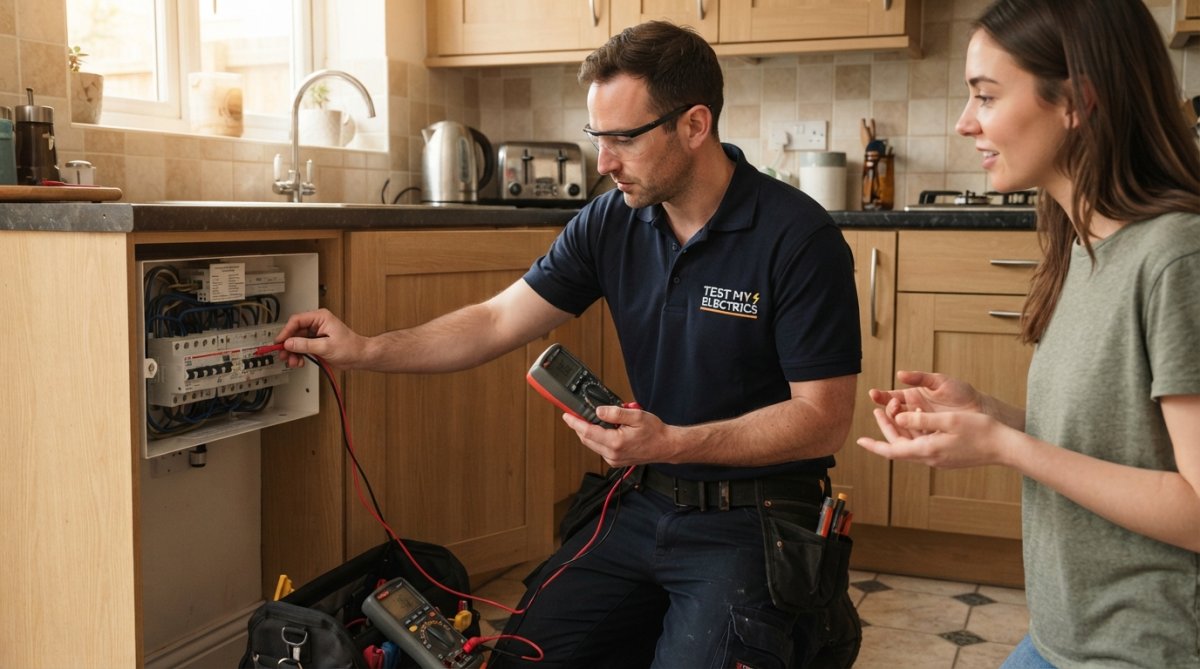
What most guides miss is that the duty does not end with obtaining the certificate. If the EICR identifies code C1 or C2 defects, you must carry out the remedial work before the property is let, or immediately if tenants are already in occupation. The certificate is evidence of testing, not evidence of safety; the safety comes from acting on what the test reveals. Landlords who treat the EICR as a box-ticking exercise miss the point of the regulation entirely.
How Long Does an EICR Last for Landlords?
An EICR for a private rented property in Scotland is valid for five years, after which a new inspection must be carried out. This five-year cycle is the standard interval set out in the Repairing Standard, and it applies regardless of whether the property has changed tenants or has been vacant for a period.
The clock starts from the date of the inspection, not from the date you receive the certificate. A common mistake is assuming a certificate issued six months after the inspection date extends your compliance window; it does not. If your last inspection was carried out in September 2021, your renewal is due by September 2026, and you should be booking the inspection now rather than waiting for an enforcement letter.
Planning ahead matters because of scheduling. Qualified electricians who hold the necessary accreditation for EICR work in Scotland are often booked several weeks in advance, particularly in the spring and summer letting season. A lapsed certificate leaves you exposed to enforcement action, and it also creates problems when tenants or letting agents request proof of compliance.
Your Electrical Inspection Checklist for Landlords
The electrical inspection checklist for landlords covers the documentation, the physical testing, and the follow-up actions that keep you compliant. Use this as your working list before, during, and after the inspection.
- Confirm your last EICR date and diarise the five-year renewal
- Book a qualified, accredited electrician with experience in rental property testing
- Ensure access to all rooms, the consumer unit, and any outbuildings
- Provide the electrician with details of any known issues or previous remedial work
- Request a copy of the certificate within a reasonable time after the inspection
- Review the report for C1, C2, and C3 codes and understand what each means
- Arrange remedial work for any C1 or C2 defects before re-letting
- Keep the certificate and any remedial work certificates for at least the next inspection cycle
- Provide the EICR to tenants at the start of the tenancy and upon request
This checklist is the practical translation of the legal duty. Working through it methodically means you are never caught short when a tenant asks for proof or when the local authority comes calling. The documentation trail matters as much as the physical condition of the installation because it demonstrates that you have met your obligations.
EICR Remedial Work Requirements: Fixing What Fails
When an EICR identifies defects, the report will classify them using the code system that electricians apply across the industry. Code C1 means danger exists and requires immediate action. Code C2 means potentially dangerous and requires urgent remedial work. Code C3 means improvement is recommended but not urgent. For rented properties in Scotland, C1 and C2 findings must be addressed before the property is let, and if tenants are in occupation, the work must be carried out without delay.
EICR remedial work requirements are not a menu you can pick from. If the inspecting electrician has identified a C2 fault, the Repairing Standard obliges you to fix it. The Electrical Safety Standards guidance for private rented accommodation explains that the landlord is responsible for ensuring the installation is safe throughout the tenancy, not just at the point of inspection.
The most common remedial findings are ageing consumer units that lack modern protection, damaged or outdated wiring in older properties, and inadequate earthing or bonding. A full rewire is rarely needed; targeted repairs often resolve the issues. The key is to use an electrician who will tell you what is essential versus what is a nice-to-have improvement, rather than one who treats every inspection as an opportunity to sell a major job.
The Cost of Non-Compliance: Fines and Enforcement
Local authorities in Scotland enforce the Repairing Standard, and they have real teeth. A landlord who fails to comply with a repair notice can face a fine of up to £5,000, and the local authority can carry out the work themselves and recover the costs from you. Beyond the financial penalty, non-compliance can trigger a rent penalty order, which prevents you from increasing the rent or, in serious cases, requires you to repay rent already collected.
The enforcement reality is that councils are increasingly proactive. They run periodic checks on rental properties, respond to tenant complaints, and share data with other agencies. A tenant who reports a suspected electrical fault can trigger an inspection that lands you with a bill far larger than the cost of a routine EICR would have been. The Scottish Government guidance on penalties for Repairing Standard breaches sets out the enforcement powers available to local authorities.
Insurance adds another layer of pressure. Most landlord insurance policies require proof of electrical safety compliance as a condition of cover. If a fire caused by an electrical fault occurs and you cannot produce a valid EICR, the insurer can decline the claim, leaving you to cover the damage and any tenant displacement costs alone.
What Is Changing in 2026 and How to Prepare
The regulatory direction for 2026 is towards tighter enforcement and clearer accountability. The Scottish Government has signalled that electrical safety remains a priority area within the broader housing quality agenda, and local authorities are being given the tools and the expectation to use them. Landlords should expect more frequent checks and less tolerance for lapsed certificates.
Preparation for 2026 means treating your five-year EICR cycle as a fixed commitment rather than an administrative afterthought. If your certificate expires this year, book the inspection now. If it expires next year, diarise the renewal date and start planning access arrangements with your tenants early. Small portfolio landlords should also review whether their letting agent is actually managing compliance on their behalf; the legal duty sits with you, the landlord, regardless of what your agent has or has not done.
Staying informed is part of the job. The Home Energy Scotland guidance for landlords provides practical updates on housing standards, and checking the Scottish Government's landlord pages regularly will keep you ahead of any changes to the Repairing Standard.
Your Next Step for Compliance
The path to compliance is straightforward: book an EICR with a qualified electrician, act on any findings, and keep your documentation in order. The landlords who run into trouble are those who delay, assume, or hope that an invisible problem will stay invisible. Electrical faults do not announce themselves politely; they surface as shocks, sparks, or fires, often at the worst possible moment.
Test My Electrics specialises in EICR testing and inspection for landlords across Ayrshire and the West of Scotland. Our integrity-first approach means we report what is actually there, not what we can upsell, and our team holds the accreditations that give your certificate real weight, including SELECT and NAPIT registration and 18th Edition qualifications. We are also South Ayrshire Council Trusted Traders, with a 4.9 rating from 321 reviews, so you can be confident the job is done properly the first time.
Frequently Asked Questions
What are the current electrical safety requirements for private landlords?
Private landlords must ensure the electrical installations in their rental properties are safe when a tenancy begins and maintained throughout. This means having an Electrical Installation Condition Report (EICR) carried out by a qualified electrician at least every five years. Any issues found that are coded as C1 or C2 require remedial work before the property is let or re-let. This duty is enforced through the Repairing Standard.
How often must an EICR be carried out in rental properties?
An EICR must be carried out at least every five years for a private rental property in Scotland. However, if your previous inspection highlighted issues or you have reason to believe the installation has been damaged, you should arrange one sooner. The five-year cycle restarts from the date of the latest inspection. Always keep a copy of the report to prove compliance.
Are there new electrical safety regulations coming into force in 2026?
The core requirement for a five-yearly EICR has been in force since December 2015 under the Repairing Standard. For 2026, the focus is on consistent enforcement and the updated versions of the wiring regulations (BS 7671) that electricians work to. Stay informed on guidance from the Scottish Government and consider using a SELECT or NAPIT registered electrician who is up to date with the 18th Edition.
What happens if a landlord fails to provide an EICR?
Failing to provide an EICR is a breach of the Repairing Standard. Your tenant can apply to the First-tier Tribunal for Scotland, which can enforce compliance. In serious cases, you may be prohibited from letting the property and face a fine of up to £5,000. You are also exposed if a tenant is injured by an electrical fault, as you have no proof the installation was safe.
Does an EICR cover portable appliance testing (PAT)?
No. An EICR assesses the fixed electrical installation: the wiring, sockets, fuse box and consumer unit. It does not cover portable appliances like kettles, toasters or televisions which tenants bring into the property. While the Repairing Standard does not mandate PAT testing for items you do not supply, you do have a duty to ensure any appliances you provide are safe.
What is the difference between a C2 and C3 code on an EICR?
A C2 code means the defect could be dangerous and requires urgent remedial work. A C3 code means the issue is not currently dangerous but should be improved to meet current safety standards. C1 and C2 issues must be fixed before the property is let. C3 issues do not require immediate action but should be noted for future maintenance planning.
The challenge for 2026 is not understanding the rules; it is acting on them before enforcement forces your hand. Book your EICR with Test My Electrics and get a clear, honest picture of your property's electrical safety, backed by certification that stands up to scrutiny from tenants, agents, and local authorities alike. Get started and secure your compliance today.