 ultimate-guide
Commercial Electrical Safety Inspection Requirements
Table of Contents
- What is a Commercial Electrical Safety Inspection?
- Legal Responsibilities for Electrical Safety at Work
- How Often Should Commercial Electrical Testing Be Done?
- Commercial Electrical Safety Checklist
- The Commercial Electrical Safety Inspection Process
- Common Findings and What They Mean
- Choosing a Qualified Inspector and Next Steps
- Frequently Asked Questions
Last Updated: September 27, 2026
What is a Commercial Electrical Safety Inspection?
A commercial electrical safety inspection is a comprehensive assessment of an organisation's electrical systems, wiring, equipment, and installations to identify hazards, ensure compliance with safety standards, and verify that everything functions safely. This differs from a residential inspection in scope and complexity, commercial properties typically have larger, more intricate electrical systems serving multiple occupants and higher power demands.
The purpose is straightforward: protect people, assets, and operations from electrical hazards. An inspection examines everything from main distribution boards and circuit breakers to individual sockets, lighting systems, and specialised equipment. The inspector tests for faults, deterioration, inadequate earthing, overloaded circuits, and other conditions that could cause fires, shocks, or equipment damage.
Test My Electrics conducts thorough commercial electrical safety inspections across Ayrshire and the West of Scotland, identifying risks before they become costly or dangerous problems. A proper inspection gives you documented evidence that your systems meet current safety standards, essential for insurance validity, tenant safety, and legal compliance.
Legal Responsibilities for Electrical Safety at Work
Organisations have a legal duty to ensure electrical safety. Under the Health and Safety at Work etc. Act 1974 and the Electricity at Work Regulations 1989, employers and property owners must maintain electrical systems in safe condition and ensure they're inspected and tested regularly. Failure to do so can result in enforcement action, fines, and civil liability if someone is injured.
The Electricity at Work Regulations place responsibility on duty holders, typically the property owner or manager, to prevent danger from electrical systems. This means you must assess electrical risks, maintain systems properly, and ensure competent people carry out work. A documented inspection demonstrates you've taken reasonable steps to identify and manage those risks.
For commercial properties, the regulations apply whether you occupy the building yourself or rent it to tenants. Landlords must ensure systems are safe; occupiers must maintain them during their tenancy. Both parties share responsibility for safety. Ignoring these requirements isn't just a compliance issue, it's a breach of legal duty that can expose you to prosecution, unlimited fines, and personal liability claims if an electrical fault causes injury or death.
The key principle: you must know the condition of your electrical systems. An inspection provides that knowledge and creates a clear record of compliance.
How Often Should Commercial Electrical Testing Be Done?
The frequency of commercial electrical testing depends on the type of property, its use, and the condition of the systems. Many organisations conduct inspections every three to five years as standard practice, though some require more frequent testing based on usage patterns or previous findings.
High-risk environments, such as properties with heavy equipment use, damp conditions, or frequent modifications, benefit from annual or biennial testing. Newly installed systems typically need verification testing before being put into service, then follow standard intervals afterward.
If an inspection identifies defects or concerns, you may need to retest sooner to confirm remedial work has resolved the issues. Similarly, after significant electrical work or modifications, follow-up testing confirms everything is functioning safely.
The practical approach: establish a testing schedule based on your property's risk profile, then stick to it. Document each inspection result. If you're uncertain about the right interval for your specific situation, a qualified inspector can recommend an appropriate schedule during an initial assessment.
Commercial Electrical Safety Checklist
A thorough commercial electrical safety inspection covers multiple areas. Understanding what's examined helps you prepare for an inspection and recognise potential issues yourself.
Main inspection areas include:
- Main distribution board and sub-boards: condition, labelling, earthing, protective devices
- Circuits and wiring: insulation condition, routing, protection from damage, appropriate cable sizing
- Sockets and switches: secure connections, proper earthing, no signs of overheating or damage
- Lighting systems: secure fixtures, proper installation, appropriate for the environment
- Emergency lighting and exit signage: functionality, battery condition, correct placement
- Earthing and bonding: continuity testing, effectiveness of protective systems
- Specialised equipment: HVAC systems, lifts, fire alarms, kitchen equipment, all checked for electrical safety
- Environmental factors: evidence of moisture ingress, corrosion, pest damage, or deterioration
- Documentation: inspection records, test certificates, maintenance logs
A qualified inspector will test insulation resistance, earth fault loop impedance, and continuity using appropriate instruments. They'll also visually assess the overall condition and identify any work that doesn't meet current standards.
The Commercial Electrical Safety Inspection Process
The inspection process is systematic and non-invasive in most cases. A qualified inspector arrives with testing equipment, reviews your existing records, and conducts a thorough visual and electrical assessment of the entire system.
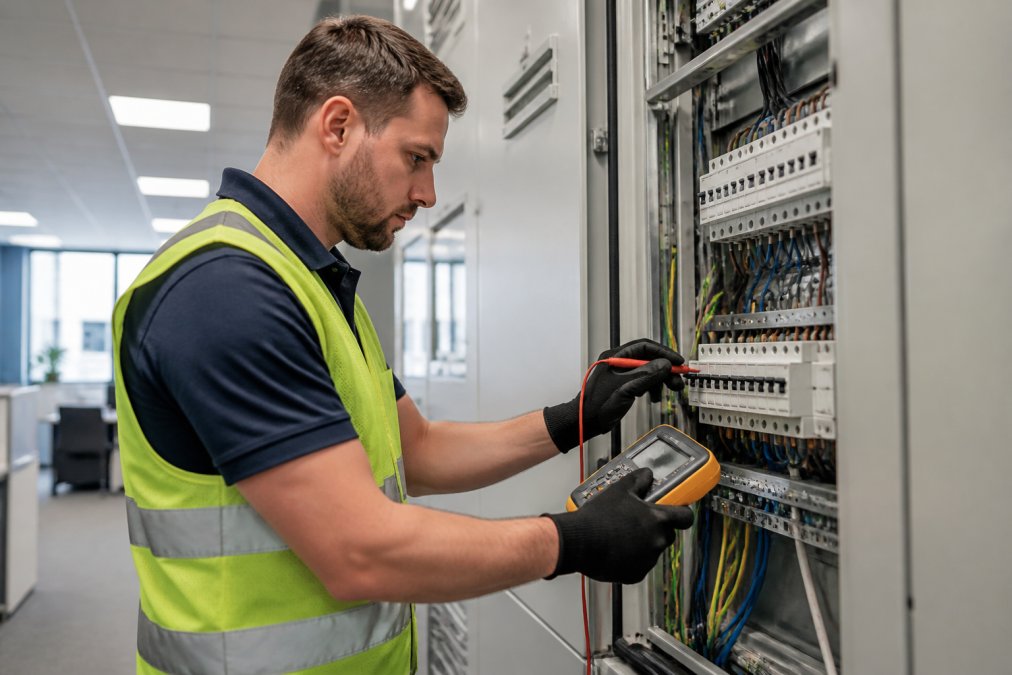
The inspector begins by understanding the property's layout, age, and any known issues. They'll examine the main distribution board, trace circuits throughout the building, test outlets and switches, and verify earthing systems. They use a multimeter and insulation tester to measure electrical properties and identify faults invisible to the naked eye.
The inspection typically takes several hours for a small commercial property, longer for larger or more complex installations. The inspector documents findings as they go, noting the condition of each circuit, any defects, and areas of concern.
After testing is complete, you receive a detailed report outlining the results. The report categorises findings as satisfactory or identifies defects, some may be minor and easily remedied, others may require urgent attention. The inspector will explain what they've found and recommend next steps, whether that's simple repairs or more extensive remedial work.
Test My Electrics provides clear, honest reporting on electrical system status. If work is needed, we outline what's essential for safety versus what's optional for improvement, no pressure to over-recommend.
Common Findings and What They Mean
Inspections frequently identify issues ranging from minor to serious. Understanding what common findings mean helps you decide on priorities.
Minor findings might include outdated labelling on circuits, missing blanking plates on unused outlets, or minor cosmetic wear on switch plates. These don't pose immediate danger but should be addressed during routine maintenance.
Moderate findings include circuits showing signs of overload, outlets with poor connections, or earthing systems that need verification testing. These typically require repair within a reasonable timeframe, perhaps weeks or months depending on severity and usage.
Major findings are defects that pose genuine risk: severely deteriorated wiring insulation, inadequate earthing, circuit breakers that don't trip properly, or evidence of overheating. These demand prompt remedial action, sometimes before the property can safely continue operating at full capacity.
If an inspection identifies defects, the next step is usually a quotation for remedial work. Some issues are straightforward, replacing a faulty outlet or re-securing loose wiring. Others may require rewiring sections of the building or upgrading the main distribution board. The scope and cost depend on what's found and how extensive the problem is.
Choosing a Qualified Inspector and Next Steps
Not every electrician is qualified to conduct commercial electrical safety inspections. You need someone certified to carry out testing under current standards, with experience in commercial properties and a track record of thorough, honest reporting.
Look for inspectors who hold relevant qualifications, C&G 2391-51 and C&G 2391-52 certifications, for example, demonstrate competence in inspection and testing (Initial and Periodic Electrical Inspection and Testing qualifications and training courses). Check whether they're registered with a recognised body like NAPIT or SELECT, which provides additional assurance of professional standards and accountability (The-importance-of-registration-for-electrical-inspection-and-testing).
Ask about their experience with properties similar to yours. A small office building has different electrical demands than a warehouse or retail space. An inspector familiar with your property type will spot issues more quickly and provide better recommendations.
Pricing varies, but be cautious of quotes that seem unusually cheap, thorough testing takes time and proper equipment.
Frequently Asked Questions
How often should a commercial electrical inspection be carried out?
The frequency depends on the type of business and equipment. Most commercial properties require an Electrical Installation Condition Report (EICR) every 3-5 years, though higher-risk environments like hospitals or factories may need annual testing. Specialist equipment such as PAT testing for portable appliances may be required annually. Your inspector will recommend the appropriate schedule based on your specific installation and usage patterns.
What is included in a commercial electrical safety inspection?
A comprehensive inspection covers the main switchboard, distribution circuits, earthing and bonding systems, condition of cables and conduits, functionality of circuit breakers and RCDs, and assessment of any modifications or damage. The inspector produces a detailed report identifying any defects, their severity, and recommendations for remedial work. This forms the basis of your EICR certification.
Are electrical inspections a legal requirement for businesses?
Yes. Under the Health and Safety at Work etc. Act 1974 and the Electricity at Work Regulations 1989, business owners and employers must ensure electrical systems are safe and regularly inspected. Failure to comply can result in enforcement action, fines, and liability if someone is injured. Landlords of commercial properties must also provide evidence of regular testing to satisfy insurance requirements and legal obligations.
What is the difference between a PAT test and an EICR?
An EICR (Electrical Installation Condition Report) inspects the fixed wiring and main electrical installation of a building. A PAT (Portable Appliance Test) checks individual portable electrical equipment like kettles, computers, and power tools. Both are important for commercial safety, but they serve different purposes. Your business may need both depending on the type of equipment you use and your premises.
Who is responsible for electrical safety in a rented commercial property?
The landlord is legally responsible for ensuring the building's fixed electrical installation is safe and regularly tested. Tenants are responsible for the safety of any equipment they bring in and must report any electrical hazards to the landlord. Both parties should agree on testing schedules and responsibility for remedial work in the lease agreement to avoid disputes.
What happens if defects are found during an inspection?
The inspector will categorise findings by severity. Dangerous defects require immediate action, while less serious issues may be scheduled for future repair. You'll receive a detailed report with recommendations and timescales for remedial work. It's important to address findings promptly to maintain compliance, insurance validity, and occupant safety. A qualified electrician can then carry out the necessary repairs and provide certification of completion.