 how-to
Urgent Electrical Repairs for Landlords: A 2026 Guide
Table of Contents
- What Counts as an Urgent Electrical Repair in a Rental Property
- Your Landlord Electrical Safety Obligations in Practice
- Step-by-Step: Responding to an Urgent Electrical Fault
- EICR Requirements for Landlords: What You Need to Know
- How to Document Electrical Repairs in Rental Properties
- When to Call a Professional Electrician
- Preventative Maintenance to Avoid Urgent Electrical Repairs
- Frequently Asked Questions
Last Updated: September 14, 2026
What Counts as an Urgent Electrical Repair in a Rental Property
Urgent electrical repairs for landlords are faults that present an immediate risk of injury, fire, or total loss of power to a habitable property. The distinction matters because it decides how fast you must act and who pays for the callout.
A tripped circuit breaker you can reset once is not urgent. Burning smells, exposed live conductors, water entering a consumer unit, or a total power failure are. Between those extremes sits a grey zone that catches landlords out constantly.
Treat these as genuine emergencies:
- Burning smells, scorch marks, or visible smoke from sockets, switches, or the consumer unit
- Exposed or damaged wiring, including cable damaged by a tenant's DIY
- Repeated tripping of an RCD or MCB that will not reset
- Water ingress into electrical fittings after a leak or storm
- Total loss of power or lighting to the property
- A shock received by anyone at the property
Anything else, such as a single dead socket or a flickering light, is a repair rather than an emergency. Log it and book it in.
Your Landlord Electrical Safety Obligations in Practice
Landlord electrical safety obligations in the private rented sector are set out in the Electrical Safety Standards in the Private Rented Sector (England) Regulations 2020 and equivalent duties across the sector. The core requirement is straightforward: the fixed electrical installation must be inspected and tested at least every five years by a qualified person, and you must hold a satisfactory report (The Electrical Safety Standards in the Private Rented Sector (England) Regulations 2020).
In practice, the paperwork is where most landlords fall short. You must give the tenant a copy of the report before they move in, or within 28 days of the inspection if they are already in residence (Electrical safety standards in the private and social rented sectors: guidance). If the report flags remedial work, that work must be completed within 28 days, or sooner if the report specifies.
Your local authority can require you to produce the report, and failure to comply can lead to a remedial notice and a financial penalty. Enforcement varies by council, but the duty itself does not.
For portfolio landlords, the practical answer is a rolling schedule rather than a single date. With fifteen properties, you want inspections staggered so you are never handling five reports in the same month.
Step-by-Step: Responding to an Urgent Electrical Fault
A calm, documented response protects both the tenant and your insurance position. Here is the sequence that works.
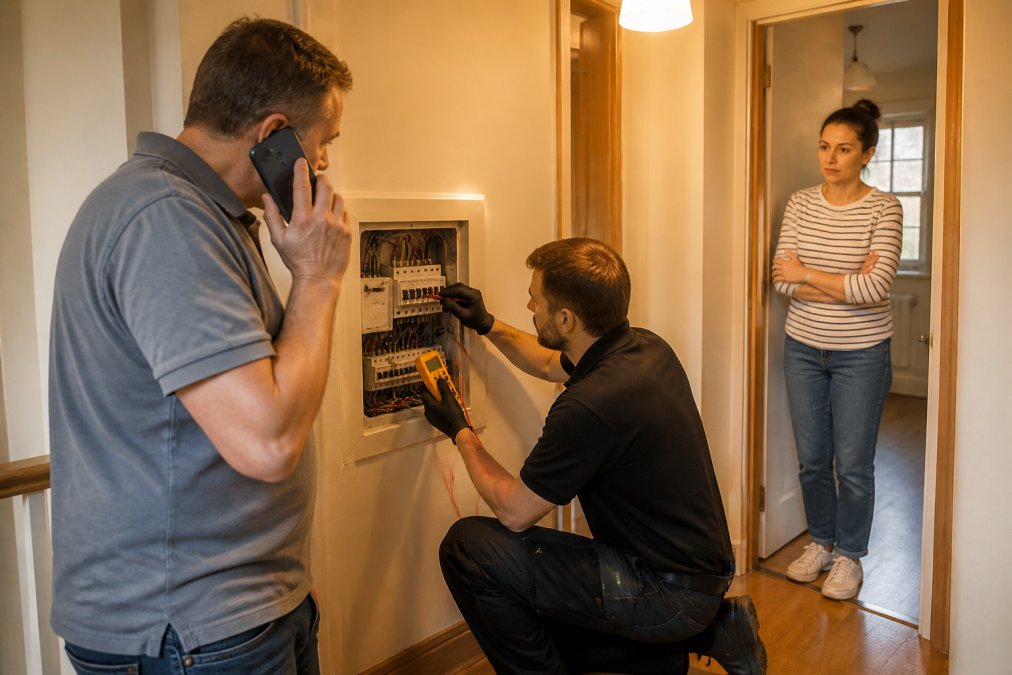
- Make the property safe. If there is smoke, burning, or a shock risk, tell the tenant to isolate the supply at the consumer unit and not to touch the affected circuit.
- Confirm the fault. Ask specific questions: which circuits are affected, whether the RCD resets, whether there is any smell or visible damage.
- Call a qualified electrician. For anything involving burning, exposed conductors, or a shock, this is a same-day call, not a next-week booking.
- Instruct the tenant. If the property is unsafe, advise them to stay clear of the affected area. If it is uninhabitable, you may need to arrange alternative accommodation.
- Record everything. Time of report, time of callout, electrician's findings, remedial work, and completion date.
- Follow up in writing. Send the tenant a summary and keep the certificate with the property file.
A common mistake is handling this over the phone with no written trail. If the fault later causes damage, your insurer will ask for the timeline.
EICR Requirements for Landlords: What You Need to Know
EICR requirements for landlords centre on one document: the Electrical Installation Condition Report. An EICR is a periodic inspection and test of the fixed wiring, accessories, and protective devices in a property, producing a graded report on its condition.
The report grades observations as C1, C2, C3, or FI. C1 means danger present, C2 means potentially dangerous, C3 means improvement recommended, and FI means further investigation required. A report is satisfactory only if it contains no C1 or C2 codes.
| Code | Meaning | Action Required |
|---|---|---|
| C1 | Danger present | Isolate and remedy immediately |
| C2 | Potentially dangerous | Remedy within 28 days |
| C3 | Improvement recommended | Address at next opportunity |
| FI | Further investigation needed | Investigate before certifying |
The five-year cycle is a maximum, not a target. If the property is older, has had significant alteration, or has a history of faults, a shorter interval is sensible. We regularly see landlords who have let the certificate lapse simply because no one diarised it.
How to Document Electrical Repairs in Rental Properties
Documenting electrical repairs in rental properties means keeping a single, dated file per property that shows what failed, what was done, who did it, and when. That file is your defence if a dispute, insurance claim, or council enquiry ever lands.
What belongs in the file:
- The current EICR and any previous reports
- Remedial works certificates for any C1 or C2 items
- Invoices and job sheets for ad-hoc repairs
- A dated log of tenant-reported faults and your response times
- Details of the electrician, including registration body and qualification
Keep it in one place, digital or physical, and make sure it survives a change of letting agent. A repair you cannot evidence is, in practical terms, a repair that did not happen.
When to Call a Professional Electrician
Call a professional electrician immediately for anything involving burning, shock, exposed conductors, water damage to fittings, or a fault you cannot isolate. Do not attempt to diagnose or repair fixed wiring yourself, and do not ask a tenant to.
The dividing line is simple. If the fault could injure someone or start a fire, it is a professional job. If it is a dead socket with no other symptoms, it is a booking rather than an emergency, but it still needs a qualified person.
For landlords weighing up whether to switch electricians, the questions worth asking are about volume capacity, reporting clarity, and honesty about what is essential versus optional. A good electrician will tell you when a rewire is not yet needed. Our guidance on what an EICR involves sets out what a proper inspection covers, so you know what you are paying for.
Preventative Maintenance to Avoid Urgent Electrical Repairs
Preventative maintenance is cheaper than emergency callouts, and it is almost entirely about routine checks rather than new equipment. Most urgent faults have a slow-burn cause that a routine inspection would have caught.
Practical measures for a rental portfolio:
- Keep the EICR current and act on C3 observations before they become C2
- Ask tenants to report flickering lights, warm sockets, or tripping breakers promptly
- Check consumer units and visible wiring at each tenancy change
- Address water leaks quickly, before they reach electrical fittings
- Consider an EV charger installation on properties with off-street parking, since a properly installed charge point avoids the temptation of ad-hoc extension leads
For landlords with multiple properties, a rolling maintenance schedule beats reactive repairs on both cost and compliance. Test My Electrics works with landlords across Ayrshire and the West of Scotland on exactly this kind of scheduled approach, including EV charger grant support where it applies.
Urgent electrical faults are the part of property management you cannot schedule, but you can prepare for them. The landlords who cope best are the ones with a current EICR, a documented repair file, and a qualified electrician they already trust before something goes wrong.
Test My Electrics provides EICR inspections, remedial work, and full reporting for landlords across Ayrshire and the West of Scotland. We are UKAS accredited, SELECT and NAPIT registered, fully insured with £10 million cover, and we tell you what is essential rather than what suits us. Book an electrician today and get your compliance in order before you need it.
Frequently Asked Questions
What counts as an emergency electrical repair for a landlord?
An emergency is any fault that risks immediate danger or leaves the property unsafe to occupy. Examples include burning smells from sockets, exposed live wiring, total power loss, or a tripping RCD that will not reset. If a tenant reports any of these, treat it as an urgent electrical repair and arrange a qualified electrician the same day. Landlord electrical safety obligations require landlords to keep installations safe, and serious faults must be addressed without delay.
How quickly must a landlord respond to an urgent electrical fault?
There is no fixed legal time limit for every fault, but you must act quickly and reasonably. Best practice is to acknowledge the report within a few hours, arrange a qualified electrician within 24 hours, and complete remedial work as soon as possible. For severe hazards, such as burning smells or exposed conductors, isolate the circuit and call an electrician immediately. Your landlord electrical safety obligations include acting on dangers identified in an EICR within 28 days or sooner if the report specifies.
Are landlords legally required to provide emergency electrical cover?
No specific law says you must hold an emergency call-out policy, but you must ensure the property remains safe and compliant. Landlord obligations imply a duty to keep electrical installations in repair. Many landlords choose a maintenance plan or a 24/7 electrician contact to handle an urgent electrical repair. If a fault makes the property unsafe, you may need to provide alternative accommodation until it is fixed, so having a plan in place protects you and your tenants.
Can a tenant withhold rent if electrical repairs are not carried out urgently?
Tenants cannot legally withhold rent simply because a repair is delayed. However, they can report you to the local authority, which may issue an improvement notice or take enforcement action. To avoid disputes, document every report and your response, including dates and the electrician's findings. If you follow the correct process for an urgent electrical repair and keep clear records, you demonstrate compliance with your landlord electrical safety obligations and reduce the risk of formal complaints or rent withholding claims.