 how-to
How to Book an EICR Inspection: A Step-by-Step Guide
Table of Contents
- Why You Need to Book an EICR Inspection
- Finding a Registered Electrician for EICR
- Preparing Your Property: EICR Preparation Checklist
- How to Book an EICR Inspection: The Booking Process
- How Long Does an EICR Take to Complete
- Understanding EICR Costs and Factors That Affect Pricing
- What to Expect During and After Your EICR Inspection
- Common Mistakes to Avoid When Booking an EICR
- Frequently Asked Questions
Last Updated: October 1, 2026
Why You Need to Book an EICR Inspection
An Electrical Installation Condition Report (EICR) is a professional inspection of your property's electrical system to check for safety issues and legal compliance. When you book EICR inspection services, you're taking the first step toward electrical safety. Think of it as a health check for your electrics. It identifies problems before they become dangerous or costly.
Many property owners and landlords delay getting an EICR done because they're unsure about the process. The good news: booking one is straightforward, and the peace of mind it brings is invaluable.
If you're a landlord, you're legally required to have an EICR completed (Electrical safety standards in the private and social rented sectors: guidance). The regulations demand that rental properties have a valid electrical safety inspection. For homeowners, an EICR protects your family and your property value. For commercial property owners, it keeps your insurance valid and your premises safe for staff and customers.
Test My Electrics has helped property owners across the region understand exactly what's involved in getting an EICR. We've simplified the booking process so you know what to expect before the electrician arrives.
Finding a Registered Electrician for EICR
The electrician you choose must be registered with a competent person scheme. This is non-negotiable. An unregistered electrician cannot issue a valid EICR report.
Look for electricians registered with one of these schemes:
- NAPIT
- SELECT
- NICEIC
- BSI
These schemes verify that electricians have the proper qualifications and follow industry standards. When you contact an electrician, ask for their registration number and scheme name. You can verify their credentials on the scheme's website.
Experience matters. An electrician who specialises in EICRs will complete the inspection faster and spot issues that a generalist might miss. Ask how many EICRs they've completed and whether they work with landlords regularly.
Prices vary, and comparing gives you confidence that you're getting fair value. However, the cheapest option isn't always the best, look for electricians with strong reviews and clear communication about what the inspection includes.
Test My Electrics is SELECT registered, NAPIT registered, and holds the C&G 2391-51 and C&G 2391-52 certifications required for EICR work. Our team has completed hundreds of inspections across the region, so you know you're getting experienced hands on the job.
Preparing Your Property: EICR Preparation Checklist
Preparing your property takes minimal effort but speeds up the inspection significantly. Here's what to do:
Access and Safety
- Clear the area around your consumer unit (fusebox) so the electrician can reach it easily
- Remove any items stored in front of electrical panels or sockets
- Ensure all rooms are accessible, lock up pets in a safe space away from the work area
Documentation
- Gather any previous electrical reports or certificates you have
- Note the approximate age of your electrical system if you know it
- List any electrical work you've had done recently
Electrical System Information
- Know how many circuits your property has (this is shown on your consumer unit)
- Identify any areas where you've noticed electrical issues: flickering lights, tripping switches, warm sockets
- Note which appliances are permanently wired in (cooker, shower, etc.)
Tenant Coordination (if applicable)
- Give tenants at least 24 hours' notice of the inspection
- Confirm access arrangements and timing
- Explain what the electrician will be doing to reduce anxiety
Utilities
- Ensure the electricity supply is live, the electrician needs to test while power is on
- Don't switch off the main supply before the inspection
A quick 30-minute tidy around your consumer unit and clear documentation makes the electrician's job faster and more thorough. You don't need to do anything to the electrics themselves, that's the electrician's role.
| Preparation Task | Why It Matters | Time Needed |
|---|---|---|
| Clear consumer unit access | Electrician can reach all parts for testing | 10 minutes |
| Gather previous reports | Helps identify patterns and historical issues | 5 minutes |
| Note problem areas | Electrician can focus on known concerns | 5 minutes |
| Notify tenants | Ensures legal access and reduces disruption | 5 minutes |
| Keep electricity on | Testing requires live power supply | N/A |
How to Book an EICR Inspection: The Booking Process
Booking an EICR takes just a few steps. The process is designed to be simple so you can get it done without hassle.
Gathering Your Property Details
When you book an EICR inspection with an electrician, have this information ready:
- Property address and postcode
- Type of property: house, flat, commercial premises
- Approximate age of the building and electrical installation
- Number of storeys
- Number of circuits (if you know it, it's shown on your consumer unit)
- Any known electrical issues or recent work
- Your preferred dates and times for the inspection
- Contact number and email address
The electrician will ask these questions to give you an accurate quote and schedule. Having answers ready speeds up the call.
Scheduling the Appointment
Most electricians offer online booking, phone booking, or email enquiries. Here's what happens next:
- Contact the electrician with your property details and preferred dates
- Receive a quote, the electrician will confirm the cost and what's included
- Confirm the booking, agree on a date and time that works for you
- Receive confirmation, you'll get an appointment confirmation with the electrician's details and arrival time
- Prepare your property, follow the checklist above in the week before the inspection
For urgent inspections or if you're near the deadline for legal compliance, mention this when booking, some electricians keep slots available for priority cases.
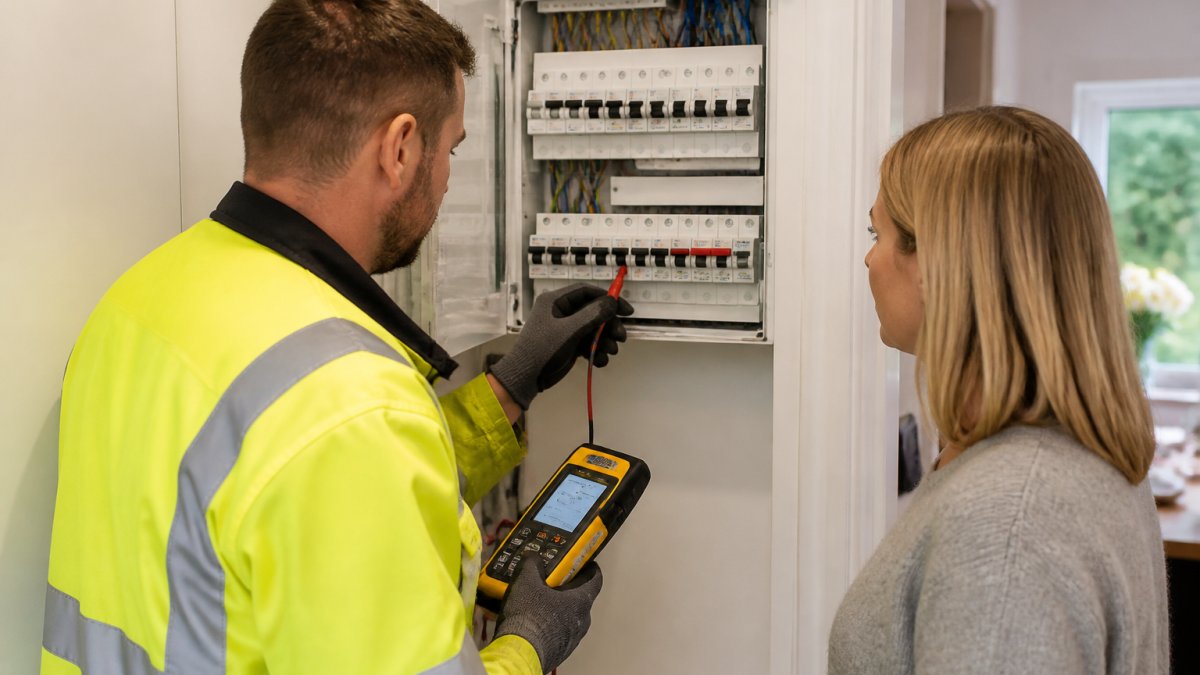
Confirming Access and Arrangements
Once your appointment is booked, confirm these details:
- Exact arrival time, ask for a time window rather than a specific hour
- Duration, confirm how long the inspection will take
- Access arrangements, ensure the electrician can get in easily
- Parking, let them know where to park if space is limited
- Emergency contact, provide a phone number in case they need to reschedule
- Tenant notification, if it's a rental property, confirm tenants have been notified
For rental properties, you're legally required to give tenants notice of the inspection. Most electricians will ask for confirmation that access has been arranged. This protects both you and them.
If you need to reschedule after booking, contact the electrician as soon as possible. Most will rearrange without penalty if you give reasonable notice.
How Long Does an EICR Take to Complete
The duration of an EICR inspection depends on the property size and system complexity. Most residential inspections take between 1 to 3 hours.
A small flat might take 1-1.5 hours.
Understanding EICR Costs and Factors That Affect Pricing
EICR pricing varies based on several factors. There's no fixed national rate, so getting quotes from electricians helps you understand the market in your area.
What Affects the Cost
What to Expect During and After Your EICR Inspection
On the day of the inspection, the electrician will arrive with testing equipment. They'll spend time checking your consumer unit, testing circuits, inspecting outlets and switches, and looking for visual signs of damage or wear.
- Code 1: Danger present, needs urgent remedial work
- Code 2: Potentially dangerous, remedial work needed soon
- Code 3: Minor issue, consider addressing during future maintenance
Common Mistakes to Avoid When Booking an EICR
Learning from others' mistakes saves you time and stress. Here are the pitfalls to avoid:
Booking an Unregistered Electrician
Not Giving Enough Notice
Failing to Prepare Access
Not Understanding What's Included
Ignoring Code 1 Findings
Skipping the Preparation Checklist
Booking Based on Price Alone
Frequently Asked Questions
What qualifications should I look for when booking an EICR?
Your electrician must hold current certification from an accredited body such as NAPIT, SELECT, or NICEIC. They should be registered with the relevant scheme and hold the C&G 2391-51 qualification (inspection) and C&G 2391-52 (testing and reporting). Verify their credentials before booking, and check they're covered by professional insurance. An 18th Edition qualified electrician ensures your EICR meets current safety standards and Building Regulations.
How long does an EICR inspection typically take to complete?
Most EICR inspections take between 1-3 hours, depending on your property's size and electrical system complexity. Smaller properties may take closer to 1 hour, whilst larger homes or those with older wiring can take longer. The electrician will need access to all areas including lofts, cupboards, and the consumer unit. Once the inspection is complete, the full report typically arrives within a few working days.
Do I need to be present during an EICR inspection?
You don't need to be present throughout the entire inspection, but it's helpful to be available at the start and end. The electrician needs access to all areas of your property, including any locked cupboards or restricted spaces. If you're a landlord with tenants in place, you'll need to arrange access with them beforehand. Confirm access arrangements when you book to avoid delays or rescheduling.
What happens if my property fails an EICR inspection?
An EICR doesn't result in a simple pass or fail. Instead, you receive a detailed report with observations coded by risk level. Code 1 items require immediate remedial action due to safety risk. Code 2 items need attention but aren't immediately dangerous. Code 3 items are recommendations for improvement. If Code 1 issues are found, you should arrange remedial work promptly. A reputable electrician will explain findings clearly and help you prioritise essential work versus improvements.