 Comparison
Electrical Survey vs EICR for UK Home Buyers
Last Updated: November 16, 2026
Quick Summary
An electrical survey is a visual check of the wiring, usually part of a wider home survey, while an EICR is a formal test of the fixed installation that gives a coded report. A survey flags whether something looks wrong; an EICR shows what is actually wrong and how urgent it is.
- A homebuyer electrical survey is a visual assessment and does not test circuits.
- An EICR tests the fixed installation against BS 7671 and produces coded observations.
- Observations are coded C1, C2, C3 or FI, with an overall satisfactory or unsatisfactory result.
- Arrange an electrical inspection after offer acceptance but before exchanging contracts.
- An EICR does not test plug-in appliances, so a clean report does not cover them.
Table of Contents
- Electrical Survey vs EICR: The Core Difference
- What Does an EICR Check?
- What a Homebuyer Electrical Survey Covers
- Side-by-Side: Scope, Depth and Limitations
- How an Electrical Check Fits With RICS Home Survey Levels
- EICR Cost for a House and What Affects the Price
- Electrical Inspection Before Buying a House: When to Arrange It
- Who Pays for an EICR: Seller EICR Responsibility
- Booking Your Pre-Purchase Electrical Check With Test My Electrics
- Frequently Asked Questions
Electrical Survey vs EICR: The Core Difference
Buying a home in the UK is a big financial decision, and the state of the wiring is easy to overlook. Test My Electrics, a team of registered electricians serving Ayrshire and the West of Scotland, regularly sees buyers confuse an electrical survey with an EICR. They are not the same thing. An electrical survey is a general check, usually part of a wider home survey, while an EICR (Electrical Installation Condition Report) is a formal, detailed test of the fixed electrical installation. Knowing which one you need, and what each one tells you, can save you from an expensive surprise after you have exchanged contracts.

The core difference is depth. A homebuyer electrical survey looks at the property as a whole and flags visible concerns. An EICR involves testing circuits and assessing the installation against the current wiring standard, BS 7671, and it results in a graded report. A useful way to put it is this: a survey tells you whether something looks wrong, while an EICR tells you what is actually wrong and how urgent it is.
What Does an EICR Check?
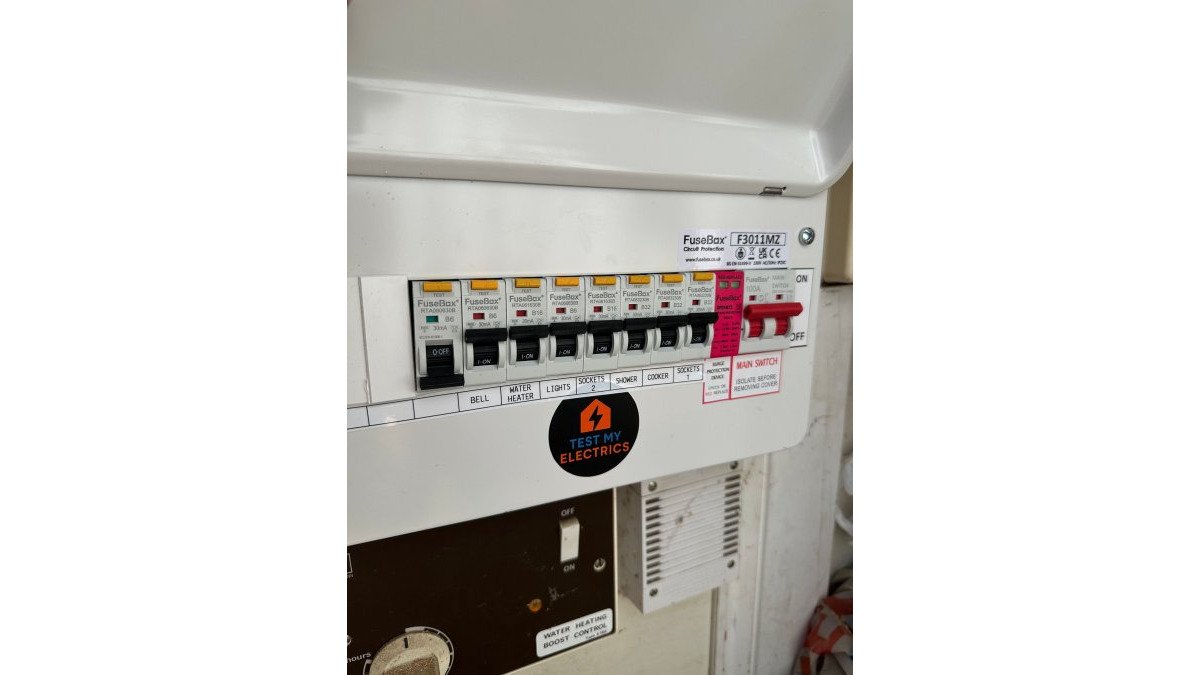
An EICR is a formal inspection of the fixed electrical installation in a property. That includes the consumer unit (fuse board), the wiring, socket outlets, light fittings, switches, earthing and bonding, and the condition of the installation as a whole. The electrician carries out a visual inspection and then a series of tests, such as insulation resistance and earth fault loop impedance, to check the system is safe to use.
The output is a report with observations, each given a code. C1 means danger present and immediate action is needed, C2 means potentially dangerous and urgent remedial action is recommended, C3 means improvement recommended, and FI means further investigation is required. The report also gives an overall satisfactory or unsatisfactory result. Watch out: an EICR only covers the fixed installation. It does not test your appliances, so a clean EICR does not mean every plug-in device is safe.
What a Homebuyer Electrical Survey Covers
A homebuyer electrical survey is a visual assessment rather than a full test. It is usually carried out by a surveyor or electrician as part of a wider property inspection. The surveyor looks at the visible parts of the installation, such as the consumer unit, accessible wiring, sockets and signs of previous electrical work, and notes any obvious defects or safety concerns.
Because it does not involve testing circuits, a survey cannot confirm that the installation is safe or compliant. It can, however, spot warning signs such as scorch marks, outdated fuse boards, exposed cables or DIY work that looks poorly installed. For many buyers it is a useful first step that decides whether a more thorough EICR is worth arranging.
Side-by-Side: Scope, Depth and Limitations
The table below sets out the main differences between the two checks, but the detail beneath it matters more than the grid.
| Factor | Homebuyer electrical survey | EICR |
|---|---|---|
| Depth | Visual inspection | Visual inspection plus testing |
| Report | General observations | Coded observations with overall result |
| Testing of circuits | No | Yes |
| Typical cost (GBP) | Often included in a home survey | Roughly GBP 180 to GBP 250 for a house |
| Best for | Initial screening | Confirming safety and compliance |
| Who typically carries it out | Surveyor or electrician as part of a wider property inspection | Registered electrician competent to test to BS 7671 |
| Access required | Visible parts only; no dismantling | Access to consumer unit, sockets, switches and some fittings; may need loft and cupboard access |
| Time on site | Minutes within a wider survey | A few hours for a typical house |
| Deliverable | Narrative comments in a survey report | A formal report with observations coded C1, C2, C3 or FI and an overall satisfactory or unsatisfactory result |
| Negotiation value | Flags visible concerns for further investigation | Gives itemised findings you can quote for remedial work |
Scope in practice. A homebuyer electrical survey is a visual assessment. The surveyor looks at the consumer unit, accessible wiring, sockets, switches and signs of previous electrical work, and notes obvious defects or safety concerns. Because it does not involve testing circuits, it cannot confirm that the installation is safe or compliant. An EICR goes further: the electrician carries out a visual inspection and then tests the installation against BS 7671, using checks such as insulation resistance and earth fault loop impedance, and records observations with a code.
Deliverables compared. The survey output is usually a paragraph or two inside a wider home survey report, often advisory in tone. The EICR output is a standalone document with coded observations and an overall result. That difference matters at the negotiating table: a coded C2 observation is a specific, quotable defect, whereas a survey comment such as "consumer unit appears dated" is a prompt to investigate rather than a finding you can price.
Suitability. For a buyer who wants a quick screen before deciding whether to spend more, a homebuyer electrical survey is often enough. For a buyer who needs to know whether the installation is safe, compliant and likely to need remedial work before exchange, an EICR is the appropriate tool. Many buyers end up with both: the survey flags a concern, and the EICR quantifies it.
Limitations shared by both. Neither can see inside walls or under floors without destructive investigation, and neither can predict how the system will perform in future. An EICR is a condition report at a point in time, not a guarantee. A clean EICR does not mean every plug-in appliance is safe, because appliances are outside its scope.
Watch out: a survey that says the electrics "appear satisfactory" is not the same as a tested installation, and treating it as such is how buyers end up funding a consumer unit replacement after completion.
How an Electrical Check Fits With RICS Home Survey Levels
Most buyers encounter the RICS Home Survey levels when they commission a survey. Level 1 is a basic condition report, Level 2 is a more detailed report for conventional homes, and Level 3 is a full building survey for older or unusual properties. Electrical comments appear within these reports, but a Level 1 or 2 survey will not replace an EICR. Its electrical comments are generally visual and advisory, and surveyors commonly recommend a specialist electrical inspection where they have concerns.
This is where buyers often get caught out. A survey may say the consumer unit looks old and suggest an electrician takes a look, which is a clear signal to arrange an EICR. Treat the survey as the starting point for the electrical check, not the end of it.
EICR Cost for a House and What Affects the Price
Costs vary by property and region. Prices depend on property size, the age of the installation, and how much access the electrician needs. For a current quote for your property, contact Test My Electrics directly.
What drives the price. Property size, the age and condition of the installation, and the level of access all affect how long an inspection takes. Older fuse boards, mixed wiring types and previous DIY work add assessment time, and locked cupboards, boarded lofts and fitted furniture over sockets can slow the work down.
How to compare quotes like for like. Ask each electrician what the price includes. One quote may cover testing and the report, while another covers testing only. Ask whether the price assumes the consumer unit is accessible, and whether it covers outbuildings, so that quotes can be compared fairly.
Cost versus negotiation value. An EICR is not just a cost; it can also be a negotiating tool. If the report identifies C2 observations, you can obtain remedial quotes and use them to support a price reduction or a request that the seller completes the work before exchange. Itemised coded observations are generally easier to discuss than a general comment.
Watch out: a quote that is significantly below typical levels may signal a limited inspection, so ask what is excluded before you book.
Electrical Inspection Before Buying a House: When to Arrange It
The best time to arrange an electrical inspection is after you have had an offer accepted but before you exchange contracts. That gives you time to act on findings, whether that means asking the seller to fix faults, negotiating a price reduction, or walking away. Arranging it too late leaves you with little room to manoeuvre.
If the property is older, has a fuse board that has not been updated, or shows signs of DIY electrical work, an EICR is worth arranging early. Finding out about electrical faults before exchange can protect you financially, as a consumer unit replacement can be a significant cost.
Who Pays for an EICR: Seller EICR Responsibility
Sellers of privately rented property may have legal duties to provide an EICR to tenants, but there is generally no legal requirement for a seller to provide an EICR when selling an owner-occupied home. Practice and expectations vary across the UK, and rules for rented and owner-occupied homes differ, so check the position that applies to your property.
In practice, buyers usually arrange and pay for their own EICR, though some sellers provide one voluntarily to speed up a sale. If a seller offers an existing EICR, check its date and the scope of the inspection, as a recent report that covers the whole installation is more useful than an old one covering only part of it. You can also ask the seller to carry out remedial work identified in an earlier report.
Booking Your Pre-Purchase Electrical Check With Test My Electrics
If you are buying in Ayrshire or the West of Scotland and want a clear picture of the wiring before you commit, Test My Electrics can carry out an EICR and give you a coded report you can act on. Our team is fully insured with £10 million cover, and we are UKAS accredited, SELECT and NAPIT registered, and a South Ayrshire Council Trusted Trader. Book an electrician today and get a clear answer on the electrics before exchange.
Frequently Asked Questions
Is an EICR legally required when buying a house? There is generally no legal requirement for a buyer to obtain an EICR when purchasing an owner-occupied home. However, it is strongly recommended, especially for older properties, because it reveals faults that a standard survey may miss.
Does a home survey include an electrical check? A standard home survey usually includes a visual look at the electrics, but it does not test the installation. For a tested assessment, you need an EICR.
How long does an EICR take? Most house inspections take a few hours, depending on the size of the property and the condition of the installation.
What happens if the EICR finds faults? The report codes each fault. You can ask the seller to fix urgent C1 and C2 items, negotiate on price, or decide whether to proceed.
Frequently Asked Questions
What is the difference between an electrical survey and an EICR?
A homebuyer survey is a broad inspection of the property's condition, and its electrical comments are usually visual and general. An EICR, or Electrical Installation Condition Report, is a detailed assessment of the fixed electrical installation by a qualified electrician, including testing and a coded classification of any defects. The EICR is the more specific check for the wiring, consumer unit and circuits, while the survey shows the wider condition of the building.
Do home buyers need an EICR before buying a property?
There is generally no legal requirement for a buyer to obtain an EICR before purchasing an owner-occupied home. Buyers who plan to let the home should check their legal obligations as a landlord, which may include obtaining an EICR. For an owner-occupier, an EICR is a sensible precaution rather than a legal obligation, particularly for older properties.
How much does an EICR cost for a home buyer?
Prices vary with property size, age, location and the amount of testing required, so Test My Electrics can provide a price for your specific property on request.
Can I ask the seller to provide an EICR?
You can ask the seller to provide a recent EICR, and this is often a reasonable request during negotiations. The seller is not obliged to supply one unless a landlord's legal duty applies to them. If no current certificate exists, you may decide to arrange your own inspection before exchange of contracts so you know the condition of the wiring before committing.