 how-to
Avoiding Electrical Safety Fines for Landlords
Table of Contents
- Why Electrical Safety Fines Matter for Landlords
- EICR Requirements for Landlords
- How Long Does an EICR Last and When to Renew
- Common Electrical Hazards in Rental Properties
- Remedial Work for Electrical Safety Compliance
- Documentation and Tenant Communication
- Taking Action: Your Next Steps
- Frequently Asked Questions
Last Updated: September 20, 2026
Why Electrical Safety Fines Matter for Landlords
Landlords face serious financial and legal consequences for failing to maintain safe electrical systems. The responsibility isn't optional, it's a legal requirement that affects your property, your tenants, and your wallet.
Regulatory bodies take electrical safety violations seriously. Fines for non-compliance can reach thousands of pounds, and in extreme cases, landlords face prosecution. Beyond the financial penalty, unsafe electrics put tenants at risk of injury or death. That liability exposure alone should motivate immediate action.
The good news: avoiding electrical safety fines for landlords is straightforward when you understand what's required. Most landlords who face penalties simply didn't know the rules or delayed taking action. This guide walks you through the essentials of staying compliant and protecting your investment.
At Test My Electrics, we help landlords across the region understand and meet their electrical safety obligations. We help landlords across the region understand and meet their electrical safety obligations.
EICR Requirements for Landlords
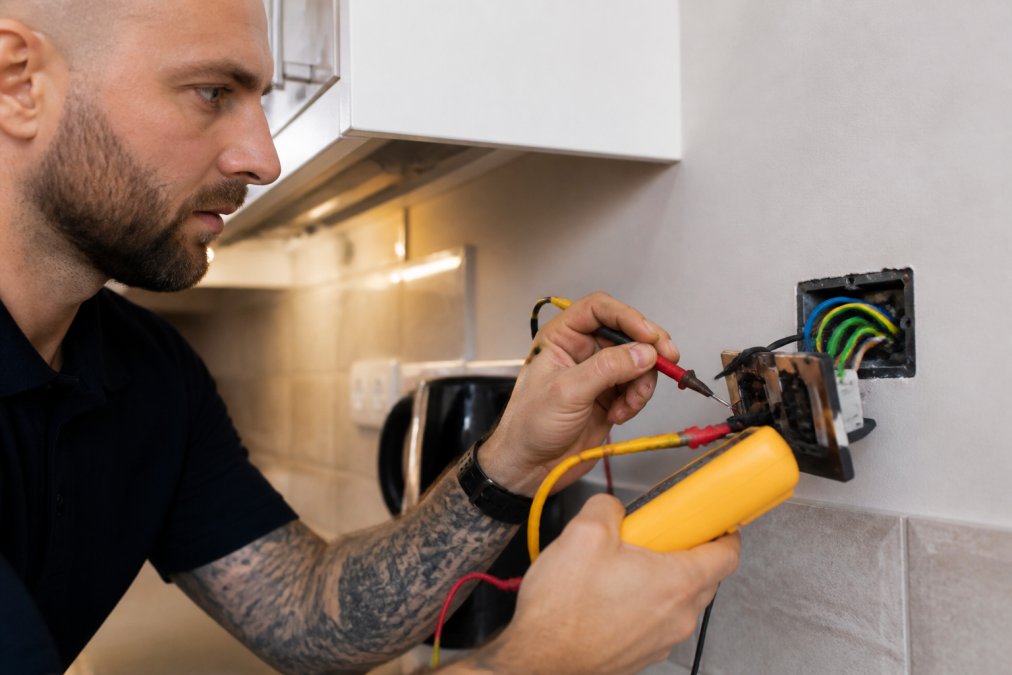
An Electrical Installation Condition Report (EICR) is a detailed inspection of your property's electrical system. It identifies safety risks and confirms whether your installation meets current safety standards.
Your EICR is not optional. Legal requirements demand that you provide tenants with safe electrical systems. An EICR documents that you've met this obligation. Without one, you have no proof of compliance if an incident occurs or if an inspector visits.
The inspection covers:
- All fixed wiring and circuits
- Consumer units and distribution boards
- Earthing and bonding systems
- Sockets, switches, and light fittings
- Appliance connections
- Any visible damage or wear
A qualified electrician completes the EICR and produces a detailed report. The report classifies any faults found and recommends remedial work. You receive a certificate showing the property's electrical safety status.
Most landlords need an EICR every five years. However, if your property has had significant electrical work, or if your previous inspection found faults, your timeline may differ. A qualified electrician advises on your specific schedule.
How Long Does an EICR Last and When to Renew
An EICR is valid for five years from the date of inspection (Electrical safety standards in the private and social rented sectors: guidance). After five years, the certificate expires and you need a new inspection to remain compliant.
The five-year rule applies to most rental properties. However, circumstances that shorten this timeline include:
- Previous EICR found faults classified as "Danger Present" or "Potentially Dangerous"
- Significant electrical work has been completed
- The property has changed use or occupancy type
- Insurance requirements specify a shorter interval
- Local authority guidance recommends earlier renewal
If your last EICR is approaching its expiry date, book your next inspection now. Waiting until the deadline creates unnecessary risk. Properties without a valid EICR are non-compliant, even if the previous report was satisfactory.
Mark your calendar for renewal. Many landlords set a reminder six months before expiry to allow time for booking and completing any remedial work that the inspection reveals.
Common Electrical Hazards in Rental Properties
Older properties often contain electrical hazards that modern standards no longer permit. Recognising these dangers helps you prioritise remedial work and understand why your EICR report flags certain issues.
Outdated wiring and systems are common in properties built before the 1980s. Rubber-insulated cables deteriorate over time. Cloth-covered wiring becomes brittle and unsafe. These systems cannot safely handle modern electrical demand from appliances, heating, and charging devices.
Damaged sockets and switches pose immediate risks. Cracked faceplates, loose connections, or water damage create shock and fire hazards. Wet environments like bathrooms and kitchens require special protection that older installations often lack.
Inadequate earthing and bonding leaves occupants vulnerable. Modern standards require proper earth connections to protect against electrical faults. Properties without these safeguards fail inspection.
Overloaded circuits occur when too many appliances draw power from insufficient capacity. This causes overheating, tripped breakers, and fire risk. An EICR identifies circuits running beyond safe limits.
Missing or faulty RCD protection (Residual Current Device) is a serious defect. RCDs detect electrical faults and cut power instantly, preventing electrocution. Modern regulations require RCD protection on most circuits.
Deteriorated consumer units (fuse boxes or circuit breaker panels) create safety risks. Corroded components, loose connections, or outdated design fail to protect occupants properly.
These hazards explain why EICR reports recommend remedial work. The inspection doesn't flag problems to upsell unnecessary work, it identifies genuine safety risks that must be corrected.
Remedial Work for Electrical Safety Compliance
When your EICR identifies faults, the report classifies them by severity. Your next step depends on the classification and the urgency of the work required.
Code 1 (Danger Present) requires immediate action. These faults pose immediate risk of injury or fire. You must stop using the affected circuit or appliance and arrange repairs urgently, often within days.
Code 2 (Potentially Dangerous) requires prompt attention. These faults don't pose immediate danger but will become hazardous if left unaddressed. Schedule remedial work within weeks, not months.
Code 3 (Recommendations for improvement) suggests upgrades that enhance safety or modernise the system. These are less urgent but still worth completing during your remedial schedule.
Common remedial work includes:
- Replacing old wiring with modern, insulated cables
- Installing RCD protection on circuits
- Upgrading the consumer unit to modern standards
- Repairing or replacing damaged sockets and switches
- Adding bonding and earthing where missing
- Separating circuits that are overloaded
The cost and scope of remedial work varies widely. A minor repair might cost a few hundred pounds. A full rewire for an older property can cost several thousand. An electrician provides a quotation after assessing the EICR findings.
Don't delay remedial work. Completing it promptly keeps your property compliant and reduces the risk of tenant complaints or regulatory action. Many landlords discover that addressing faults early costs less than emergency repairs later.
Documentation and Tenant Communication
Your EICR certificate and any remedial work records form your compliance documentation. Keep these documents organised and accessible. They prove you've met your legal obligations if questions arise.
Store your EICR certificate in a safe location. You need it to prove compliance. Provide a copy to tenants, many tenancy agreements require this, and good practice demands transparency about safety.
Document all remedial work completed. Keep invoices, completion certificates, and any follow-up inspection reports. If remedial work required a second EICR to confirm completion, file that report as well.
Communicate with tenants about electrical safety. Inform them when inspections are scheduled. Explain any remedial work that affects their use of the property. A transparent approach builds trust and cooperation.
Update your insurance if remedial work significantly changes the property's electrical system. Insurers need accurate information about your property's condition.
Review your tenancy agreement to confirm it requires tenants to report electrical faults promptly. Encourage tenants to contact you immediately if they notice damage, sparks, burning smells, or other warning signs.
Maintaining clear records protects you legally and demonstrates your commitment to safety. If a tenant raises a concern or an inspector visits, your documentation shows you've acted responsibly.
Taking Action: Your Next Steps
Avoiding electrical safety fines for landlords begins with understanding your obligations and acting on them. The process is straightforward when you break it into steps.
Step 1: Check your current EICR status. Do you have a valid certificate? When does it expire? If you've never had an EICR, or if your certificate is more than five years old, you're non-compliant now.
Step 2: Book an inspection. Contact a qualified electrician to arrange your EICR. The inspection typically takes a few hours, depending on property size. Schedule it at a time that suits your tenants' access.
Step 3: Review the report carefully. Once you receive your EICR, read it thoroughly. Understand which faults are classified as Code 1, Code 2, or Code 3. Ask your electrician to explain any findings you don't understand.
Step 4: Plan remedial work. Prioritise Code 1 faults immediately. Schedule Code 2 work within weeks. Code 3 improvements can be planned for the longer term, but completing them enhances safety and property value.
Step 5: Arrange repairs with a qualified electrician. Use the same electrician who completed your EICR, or find another qualified professional. Ensure all work meets current standards and receives a completion certificate.
Step 6: Keep your documentation. File your EICR certificate, remedial work invoices, and completion certificates. Provide copies to tenants as required.
Step 7: Set a reminder for renewal. Mark your calendar for five years after your EICR date. Plan your next inspection well in advance to avoid compliance gaps.
Test My Electrics helps landlords complete each of these steps. Our team conducts thorough EICRs, identifies safety risks clearly, and recommends practical remedial solutions.
Frequently Asked Questions
What are the penalties for landlords failing to provide an EICR?
Landlords who fail to comply with electrical safety regulations can face significant fines. Beyond financial penalties, non-compliance puts tenants at risk and can result in enforcement action by local authorities. Regular EICRs and prompt remedial work are your best defence against these penalties.
How often must a landlord carry out electrical safety inspections?
An EICR must be carried out every five years, or when a new tenancy begins if the previous inspection is older than five years. If remedial work is identified as urgent during an inspection, you must arrange repairs immediately. For properties with ongoing tenancies, the five-year cycle resets from the date of the most recent inspection, so maintaining accurate records ensures you never miss a deadline.
What happens if an electrical inspection reveals urgent remedial work?
If urgent remedial work is identified during an EICR, you must stop using the affected circuit or appliance immediately and arrange repairs without delay. The inspection report will clearly flag urgent issues. Failure to address urgent remedial work quickly puts tenants at risk and exposes you to liability and enforcement action. A qualified electrician can advise on timescales and temporary measures if repairs cannot happen immediately.
Are landlords legally required to provide a copy of the EICR to tenants?
Yes, you must provide a copy of the EICR to existing tenants within 28 days of the inspection, and to new tenants before they move in. You must also provide a copy to the local authority if requested. Keeping detailed records of when reports were issued and to whom protects you in the event of an enforcement investigation.
Electrical safety compliance protects your tenants and your investment. Delaying action increases your risk of fines, insurance disputes, and potential injury claims. Test My Electrics provides the professional inspection and guidance you need to stay compliant. Book an electrician today and confirm your property meets current safety standards.