 blog
blog
Allan Electrical vs Falcon Electrical: Which Is Right for You?
Table of Contents
- Allan Electrical vs Falcon Electrical: Overview
- Key Services and Specialisms
- How to Find a Registered Electrician You Can Trust
- Electrical Safety Standards for Landlords
- EICR Cost in Scotland and What Affects Pricing
- Credentials, Qualifications, and Insurance
- Making Your Choice
- Frequently Asked Questions
Last Updated: September 19, 2026
Allan Electrical vs Falcon Electrical: Overview
When you're comparing electrical contractors, the choice between Allan Electrical vs Falcon Electrical comes down to specific needs, service quality, and whether you can trust the electrician to be honest about what your property actually requires. Both operate in the Scottish market, but they serve different customer bases and bring different approaches to electrical work.
The real question isn't which one is universally "better", it's which one matches your situation. Are you a landlord needing EICR certification for legal compliance? A homeowner planning a rewire? A property investor managing multiple units? Your answer changes which contractor makes sense.
At Test My Electrics, we work across Ayrshire and the West of Scotland with the same integrity-first approach: no pressure to upsell, no recommending work you don't actually need. That philosophy shapes how we think about this comparison. We'll walk through what matters when you're evaluating any electrical contractor, then show you how the major players stack up.
Key Services and Specialisms
Both Allan Electrical and Falcon Electrical offer broad electrical services, but their specialisms differ meaningfully. Understanding where each excels helps you pick the right fit.
Allan Electrical focuses on domestic and commercial installations, rewiring, and general electrical maintenance. They handle new builds, extensions, and system upgrades. Their strength is in breadth, they're equipped for most standard electrical work a property owner might need.
Falcon Electrical emphasises testing, inspection, and compliance work. If you're after an EICR (Electrical Installation Condition Report), they're positioned as specialists in that space. For landlords and property managers needing regular safety certification, this focus matters.
Test My Electrics specialises in exactly what landlords and property owners need most: comprehensive electrical testing and inspection, with a particular focus on EICR certification. We also handle rewiring, EV charger installation, and solar integration, but our core strength is the integrity-first inspection that tells you precisely what your property needs, without pressure to over-specify work.
| Service | Allan Electrical | Falcon Electrical | Test My Electrics |
|---|---|---|---|
| EICR Certification | Yes | Specialist focus | Specialist focus |
| Rewiring | Yes | Limited | Yes |
| New installations | Yes | Limited | Commercial focus |
| EV chargers | Possible | Not standard | Yes, with grant support |
| Testing & inspection | Yes | Specialist | Yes, comprehensive |
The practical difference: if you need a quick fix or a new circuit installed, either contractor can handle it. If you need someone to thoroughly inspect your property and tell you what's genuinely dangerous versus what's just ageing, that's where specialisation shows.
How to Find a Registered Electrician You Can Trust
Choosing any electrical contractor, whether Allan Electrical, Falcon Electrical, or another firm, starts with verifying they're actually qualified to do the work. This isn't optional. A dodgy electrician creates genuine safety risks and legal liability.
Check their registration. In the UK, electricians should be registered with a competent person scheme (Competent person scheme - current schemes and how schemes are authorised). Look for NAPIT, SELECT, or NICEIC registration. These bodies maintain standards and require ongoing training. If an electrician can't show current registration, walk away, no exceptions.
Ask for evidence of 18th Edition qualification. The 18th Edition of BS 7671 is the current standard for electrical installations in the UK. Any electrician working on your property should hold this qualification.
Verify their insurance. Professional indemnity and public liability insurance protect you if something goes wrong. Ask for a copy of their certificate. A reputable electrician will have this readily available, they know it matters. Test My Electrics carries £10 million in coverage.
Request references from similar projects. If you're a landlord needing EICR work, ask for references from other landlords they've worked with. If you're planning a rewire, ask for homeowners they've rewired. A contractor confident in their work will provide them.
Check online reviews, but read carefully. A single glowing review means nothing. Look for patterns: do multiple customers mention the same strengths or weaknesses? Are complaints about communication, pricing transparency, or quality consistent? A 4.9 rating from 321 reviews (like Test My Electrics holds) tells a different story than five reviews scattered across a year.
Trust your gut on communication. When you call or email, do they answer promptly? Do they explain things clearly, or do they use jargon to sound impressive? An electrician who takes time to explain what they're finding is more trustworthy than one who rushes through the job.
Electrical Safety Standards for Landlords
If you're letting a property, you're legally responsible for its electrical safety. This isn't discretionary, it's a regulatory requirement with real penalties for non-compliance.
Landlords are required to have the electrical installation in a rental property inspected and tested by a qualified electrician (Electrical safety standards in the private and social rented sectors: guidance). The inspection must happen at least every five years, or more frequently if the property has been empty for extended periods (Electrical safety standards in the private and social rented sectors: guidance).
The inspection produces an EICR, an Electrical Installation Condition Report. This document tells you whether the installation is safe, needs attention, or is dangerous. It's not just a tick box; it's your legal proof that you've done your duty of care.
What many landlords don't realise: local authorities now have power to issue Enforcement Notices requiring remedial work within specific timescales. Fines for non-compliance can reach thousands of pounds. More importantly, if a tenant is injured due to faulty electrics and you can't prove you had it inspected, your liability becomes personal.
The practical step: get your EICR done every five years minimum. If the report flags defects, act on them promptly. Don't wait until enforcement action arrives.
EICR Cost in Scotland and What Affects Pricing
Landlords ask this question constantly: how much will an EICR actually cost? The answer depends on several factors, and understanding them helps you budget realistically.
An EICR inspection cost varies based on property size, system complexity, and how accessible the electrics are. A small flat with straightforward wiring costs less to inspect than a large house with multiple circuits, old installations, or difficult-to-access consumer units.
The inspection itself typically takes 2-4 hours depending on property size. If the electrician finds defects requiring remedial work, that's a separate cost, the inspection identifies the problem, but fixing it is additional.
Several factors push costs up:
- Older properties with outdated wiring require more detailed investigation
- Properties with extensions or modifications add complexity
- Poor access to the consumer unit or circuits increases inspection time
- Properties that have been empty for extended periods may need more thorough testing
Several factors can reduce costs:
- Well-maintained properties with clear, accessible electrics are quicker to inspect
- Properties with recent electrical work already certified need less scrutiny
- Booking multiple properties at once (if you're a portfolio landlord) may offer efficiency savings
For current pricing specific to your property, contact an electrician directly for a quote. Pricing varies by contractor and property specifics, so comparing quotes from multiple providers makes sense. When you do, make sure you're comparing like-for-like: a full EICR from one contractor should match the scope of another's quote.
Test My Electrics provides transparent quotes based on your property's actual requirements, no pressure to over-specify work.
Credentials, Qualifications, and Insurance
When you're trusting someone to work on your property's electrical system, their credentials matter enormously. This is where professional standards separate the serious operators from the cowboys.
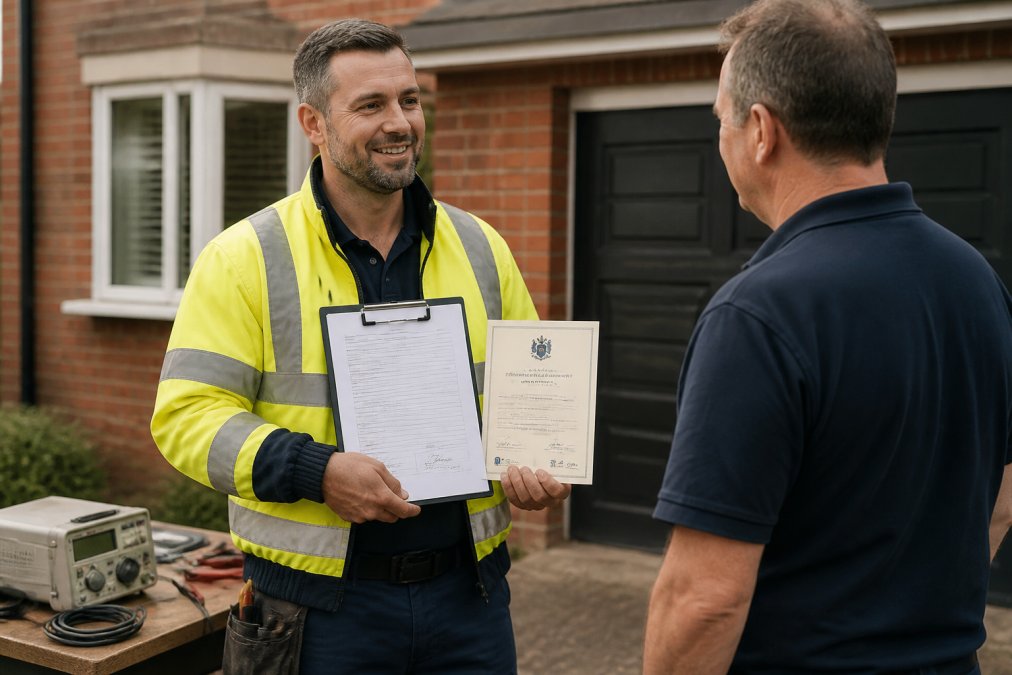
18th Edition BS 7671 qualification is the current standard for electrical installations in the UK. Any electrician working on your property should hold this.
NAPIT, SELECT, or NICEIC registration shows the electrician belongs to a competent person scheme. These bodies audit their members, require ongoing training, and maintain professional standards. Registration isn't a one-time thing, it's renewed regularly, which means the electrician has to stay current with regulations.
C&G 2391-51 and C&G 2391-52 certifications are the specific qualifications for testing and inspection work (the technical bit of EICR certification). Not every electrician holds these, they're specialist qualifications.
Making Your Choice
Comparing Allan Electrical vs Falcon Electrical means looking beyond brand names and asking what you actually need. Are you a landlord needing reliable EICR certification every five years? A homeowner planning a major rewire? A property investor managing multiple units?
- Can they prove current registration and qualifications?
- Do they explain what they're finding, or do they just hand you a bill?
- Are they willing to provide references from customers like you?
- Do they push for unnecessary work, or do they recommend only what's essential?
Frequently Asked Questions
What should I look for when hiring an electrical contractor?
Look for contractors with current qualifications such as 18th Edition certification and credentials from recognised bodies like NAPIT or SELECT. Check they hold appropriate insurance (ideally £10 million public liability cover) and ask for references from recent projects. A reliable electrician will provide a detailed written quote, explain findings transparently, and won't pressure you into unnecessary work. Verify they're registered with a trade body and ask about their experience with your specific needs, whether that's EICR inspections, rewiring, or EV charger installation.
How often should I have my electrical systems inspected?
Landlords must have electrical systems inspected every five years under equivalent requirements in Scotland. Homeowners aren't legally required to have inspections but should consider one every 10 years, or sooner if the property is older, you've noticed faults, or you're planning renovation work. If you're buying a property, a pre-purchase inspection identifies hidden hazards before you commit.
Are local electrical contractors required to be registered with a trade body?
Whilst not legally mandatory, registration with bodies like NAPIT, SELECT, or RECC demonstrates a contractor meets industry standards and ongoing training requirements. These bodies enforce codes of conduct and provide consumer protection. When comparing contractors, checking their registration status is a straightforward way to verify they're qualified and accountable. Ask any contractor for proof of registration before hiring.
What factors affect EICR cost in Scotland?
EICR pricing depends on property size, age of the electrical installation, complexity of the system, and the number of circuits to test. Older properties or those with outdated wiring typically cost more to inspect. Location and accessibility also matter. Rather than comparing basic prices, ask contractors for a detailed quote explaining what's included in their inspection and what happens if they find faults. Pricing varies between providers, so request quotes from multiple electricians to understand the market.
Choosing the right electrician protects your property, keeps your tenants safe, and ensures you're legally compliant. Test My Electrics brings 18th Edition qualification, NAPIT registration, and the integrity-first approach that means you'll know exactly what your property needs, and nothing more. Book an electrician today and get a transparent assessment of your electrical system's safety and compliance status.